

Description
Shiitake — Indoor Cultivation Overview
Lentinula edodes is one of the most widely cultivated edible mushrooms in the world, with a long history of use in East Asian cuisine and traditional medicine. This indoor cultivation strain has been selected for performance on sawdust and straw-based substrates, making it suitable for bag cultivation in controlled indoor environments.
- Liquid culture of Lentinula edodes, indoor cultivation strain
- 10–12ml syringe for inoculation into sterilized substrate
- Recommended substrate: hardwood sawdust or wheat straw with 10% nitrogen supplement
- Colonization temperature: 65–75°F; fruiting temperature: 55–65°F
- Saprophytic; grows on dead or decaying hardwood
- Edible; widely used in culinary and ethnomedicinal contexts
Characteristics and Identification
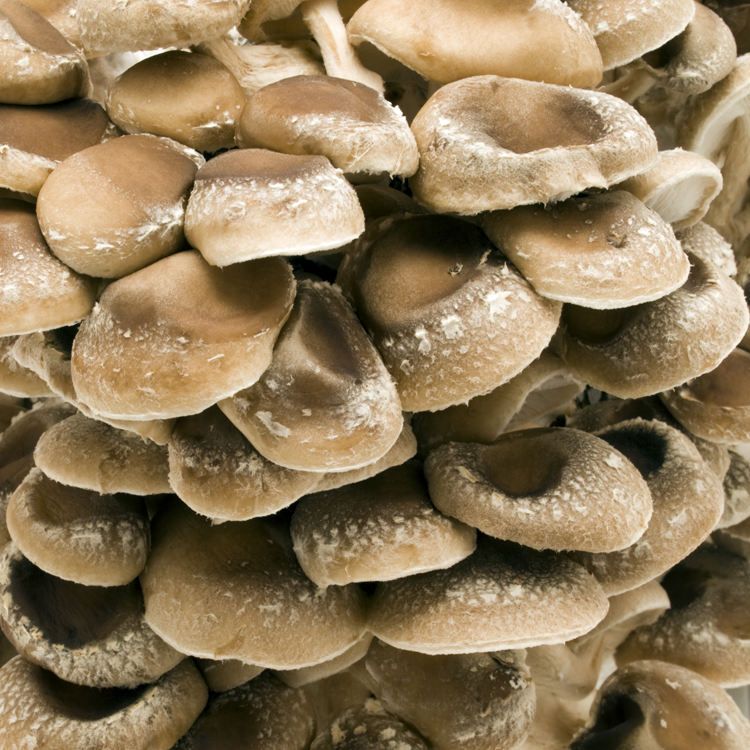
Shiitake produces medium to large caps ranging from tan to dark brown, often with a slightly umbonate center and cracked or scaly surface texture when mature. Gills are white, close, and free from the stipe. The stipe is fibrous and off-white to tan. Flesh is firm and white. Spore print is white. Under indoor cultivation conditions, cap size varies depending on incubation duration and fruiting temperatures, with shorter incubation periods generally producing smaller, more uniform mushrooms.
Habitat and Ecology
Lentinula edodes is a white rot saprotroph, breaking down lignin and cellulose in dead hardwood. In its native range across East Asia — primarily China, Japan, and Korea — it is found on oak, chestnut, and related hardwoods. Natural fruiting occurs in spring and autumn, typically following rain and temperature fluctuation. In cultivation, hardwood sawdust closely replicates the natural substrate and growth conditions.
Cultivation Considerations
This indoor strain colonizes hardwood substrates at 65–75°F. Fruiting is typically initiated by a temperature drop to 55–65°F combined with increased fresh air exchange and high relative humidity (85–95%). Blocks may be soaked in cold water prior to fruiting to simulate seasonal rainfall.
Hardwood sawdust supplemented with approximately 10% nitrogen — such as wheat bran or rice bran — at 60–65% moisture content is the primary recommended substrate. Pasteurized wheat straw is a viable lower-cost alternative, though colonization rates and block density differ from sawdust-based substrates.
Shiitake performs well across multiple flushes when blocks are allowed to rest and rehydrate between fruiting cycles. Colonization is accessible for cultivators familiar with sterilized substrate preparation. Fruiting initiation requires attention to temperature differential and humidity management.
Scientific Interest
Lentinula edodes has been studied extensively for its bioactive compounds, particularly lentinan, a beta-glucan polysaccharide, and eritadenine, associated with cholesterol metabolism research. It is one of the most studied edible fungi in ethnomedicinal literature. Clinical research remains ongoing, and this product is not represented as a therapeutic agent.
Shiitake Taxonomy
| Kingdom | Fungi |
| Phylum | Basidiomycota |
| Class | Agaricomycetes |
| Order | Agaricales |
| Family | Omphalotaceae |
| Genus | Lentinula |
| Species | L. edodes |
| Common Name | Shiitake |
Shiitake Indoor Cultivation (Lentinula edodes) Liquid Culture Syringe
Description
Shiitake — Indoor Cultivation Overview
Lentinula edodes is one of the most widely cultivated edible mushrooms in the world, with a long history of use in East Asian cuisine and traditional medicine. This indoor cultivation strain has been selected for performance on sawdust and straw-based substrates, making it suitable for bag cultivation in controlled indoor environments.
- Liquid culture of Lentinula edodes, indoor cultivation strain
- 10–12ml syringe for inoculation into sterilized substrate
- Recommended substrate: hardwood sawdust or wheat straw with 10% nitrogen supplement
- Colonization temperature: 65–75°F; fruiting temperature: 55–65°F
- Saprophytic; grows on dead or decaying hardwood
- Edible; widely used in culinary and ethnomedicinal contexts
Characteristics and Identification
Shiitake produces medium to large caps ranging from tan to dark brown, often with a slightly umbonate center and cracked or scaly surface texture when mature. Gills are white, close, and free from the stipe. The stipe is fibrous and off-white to tan. Flesh is firm and white. Spore print is white. Under indoor cultivation conditions, cap size varies depending on incubation duration and fruiting temperatures, with shorter incubation periods generally producing smaller, more uniform mushrooms.
Habitat and Ecology
Lentinula edodes is a white rot saprotroph, breaking down lignin and cellulose in dead hardwood. In its native range across East Asia — primarily China, Japan, and Korea — it is found on oak, chestnut, and related hardwoods. Natural fruiting occurs in spring and autumn, typically following rain and temperature fluctuation. In cultivation, hardwood sawdust closely replicates the natural substrate and growth conditions.
Cultivation Considerations
This indoor strain colonizes hardwood substrates at 65–75°F. Fruiting is typically initiated by a temperature drop to 55–65°F combined with increased fresh air exchange and high relative humidity (85–95%). Blocks may be soaked in cold water prior to fruiting to simulate seasonal rainfall.
Hardwood sawdust supplemented with approximately 10% nitrogen — such as wheat bran or rice bran — at 60–65% moisture content is the primary recommended substrate. Pasteurized wheat straw is a viable lower-cost alternative, though colonization rates and block density differ from sawdust-based substrates.
Shiitake performs well across multiple flushes when blocks are allowed to rest and rehydrate between fruiting cycles. Colonization is accessible for cultivators familiar with sterilized substrate preparation. Fruiting initiation requires attention to temperature differential and humidity management.
Scientific Interest
Lentinula edodes has been studied extensively for its bioactive compounds, particularly lentinan, a beta-glucan polysaccharide, and eritadenine, associated with cholesterol metabolism research. It is one of the most studied edible fungi in ethnomedicinal literature. Clinical research remains ongoing, and this product is not represented as a therapeutic agent.
Shiitake Taxonomy
| Kingdom | Fungi |
| Phylum | Basidiomycota |
| Class | Agaricomycetes |
| Order | Agaricales |
| Family | Omphalotaceae |
| Genus | Lentinula |
| Species | L. edodes |
| Common Name | Shiitake |