


Description
Bears Head Tooth (Hericium americanum) — Product Summary
• 10cc liquid culture syringe containing viable Hericium americanum mycelium
• Saprophytic hardwood species native to eastern North America — distinct from the conifer-associated Hericium abietis
• Branching Hericium species; morphologically intermediate between Lions Mane and Coral Tooth
• Suitable for hardwood sawdust, supplemented hardwood substrates, and masters mix
• Sensitive to CO₂ accumulation — adequate fresh air exchange is essential during fruiting
• Store refrigerated between 35–45°F; avoid freezing
• Ships with a sterile needle; use within 4–6 months of receipt
Bears Head Tooth (Hericium americanum) Overview
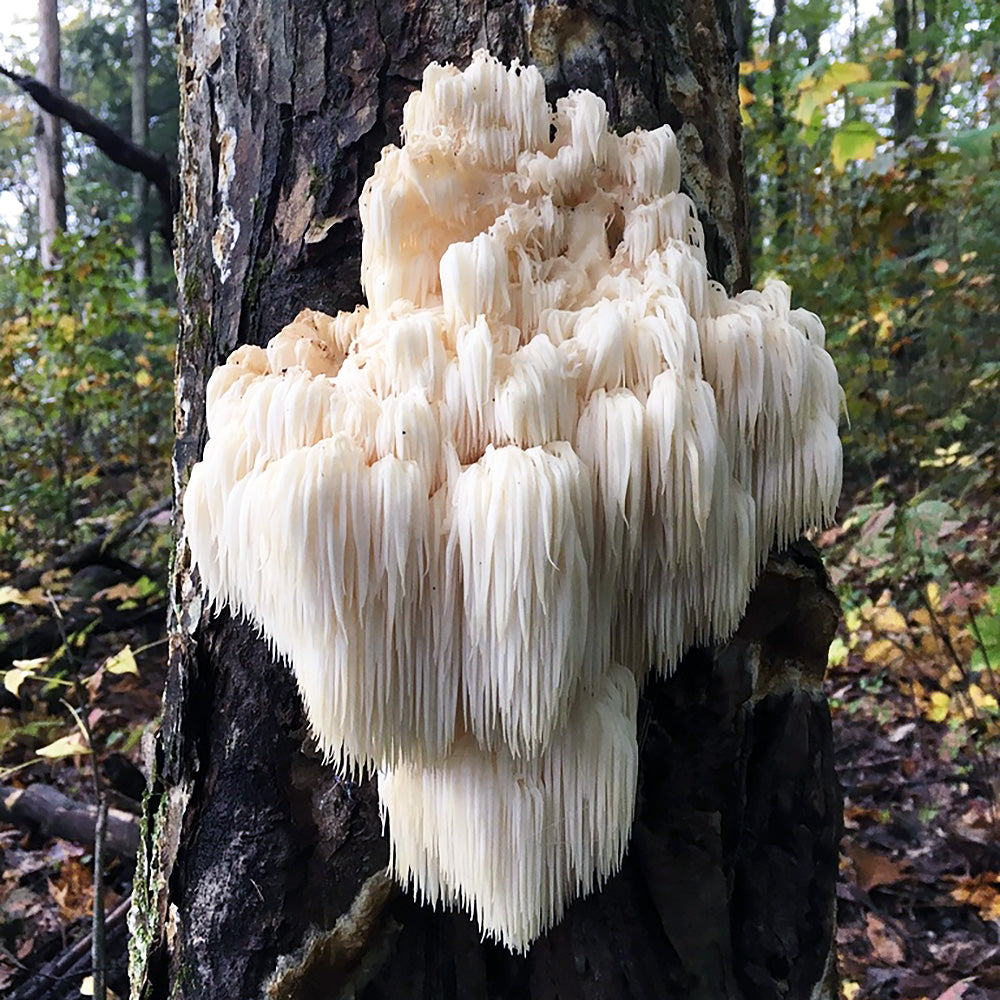
Hericium americanum, commonly known as Bears Head Tooth, is a branching tooth fungus native to eastern North America, where it grows on dead and dying hardwood trees across deciduous and mixed forest zones. It is one of three primary Hericium species found in North America alongside Hericium erinaceus and Hericium abietis. Bears Head Tooth is distinguished from Hericium erinaceus by its branched structure and from Hericium abietis by its hardwood host association rather than conifer. Hericium americanum produces a visually striking white cascading fruiting body with pendant spines hanging from repeatedly branched arms, making it one of the more identifiable species in North American woodland settings. It is an edible species with a flavor and texture comparable to Lions Mane.
Bears Head Tooth Characteristics and Identification
Hericium americanum produces a large, repeatedly branched fruiting body ranging from 15 to 40 cm across at maturity, with white pendant spines hanging from the tips of multiple branching arms. The branching structure is more compact than Hericium coralloides and more openly branched than the single unbranched clump of Hericium erinaceus, placing it morphologically between the two. Spines are white when fresh, yellowing with age. Flesh is white, firm, and moist. Spore print is white. In the field, Bears Head Tooth is most reliably identified by its combination of branched structure and hardwood host — a branching Hericium on eastern hardwoods is more likely to be Hericium americanum than either of the other North American species. Microscopic analysis supports definitive identification where species confirmation is required.
Bears Head Tooth Habitat and Ecology
In the wild, Hericium americanum grows on wounds and decaying wood of hardwood trees across eastern North America, with a range extending from the Great Lakes and New England south through the Appalachian Mountains and into the upper South. Host trees include beech, oak, maple, and other hardwood species common to eastern deciduous forests. Bears Head Tooth functions as both a wound parasite on living trees and a saprotroph on standing dead wood and fallen logs. It fruits from late summer through autumn, typically appearing at the same time as Hericium erinaceus in overlapping habitat zones. The two species are occasionally found growing in proximity on different host wounds within the same stand of trees.
Bears Head Tooth Cultivation Considerations
Hericium americanum colonizes sterilized hardwood grain and hardwood-supplemented substrates effectively in cultivation, following the same general approach used for Hericium erinaceus. Supplemented hardwood sawdust, masters mix, and hardwood grain all support reliable colonization. Bears Head Tooth shares the CO₂ sensitivity common to the Hericium genus — inadequate fresh air exchange during fruiting produces elongated, poorly structured spines rather than the full branching architecture the species naturally develops. High humidity, consistent air exchange, and fruiting temperatures in the 55–72°F range produce well-developed fruiting bodies. Pinning is initiated by humidity and temperature stimulus and the species is capable of producing multiple flushes from a single colonized substrate block.
Bears Head Tooth Cultivation Parameters
|
Parameter |
Range |
|
Incubation Temperature |
70°F – 77°F |
|
Incubation Time |
12 – 18 days |
|
Fruiting Temperature |
55°F – 72°F |
|
Fruiting Humidity |
85% – 95% |
|
Pinning Time |
5 – 12 days |
|
Total Fruiting Time |
12 – 20 days |
Bears Head Tooth Scientific Interest
Hericium americanum is of ongoing taxonomic interest as species boundaries within the North American Hericium complex continue to be refined through molecular and morphological study. Its position as a hardwood-associated branching species in eastern North America provides a useful point of comparison with the conifer-associated Hericium abietis of the west and the unbranched Hericium erinaceus found across both continents. Research into secondary metabolite composition in the Hericium genus has focused primarily on Hericium erinaceus, and comparative studies examining Hericium americanum and Hericium abietis remain relatively limited. Out-Grow makes no health claims regarding this or any other species we carry.
Bears Head Tooth (Hericium americanum) Taxonomy
• Kingdom: Fungi
• Division: Basidiomycota
• Class: Agaricomycetes
• Order: Russulales
• Family: Hericiaceae
• Genus: Hericium
• Species: Hericium americanum
• Common Names: Bears Head Tooth, Bears Head, American Coral Tooth
Bears Head Tooth (Hericium americanum) Liquid Culture Syringe
Product Overview
Key Features
Detailed Cultivation Guide
Storage Recommendations
Cultivation and Educational Value
Safety Information
Disclaimer
Description
Bears Head Tooth (Hericium americanum) — Product Summary
• 10cc liquid culture syringe containing viable Hericium americanum mycelium
• Saprophytic hardwood species native to eastern North America — distinct from the conifer-associated Hericium abietis
• Branching Hericium species; morphologically intermediate between Lions Mane and Coral Tooth
• Suitable for hardwood sawdust, supplemented hardwood substrates, and masters mix
• Sensitive to CO₂ accumulation — adequate fresh air exchange is essential during fruiting
• Store refrigerated between 35–45°F; avoid freezing
• Ships with a sterile needle; use within 4–6 months of receipt
Bears Head Tooth (Hericium americanum) Overview
Hericium americanum, commonly known as Bears Head Tooth, is a branching tooth fungus native to eastern North America, where it grows on dead and dying hardwood trees across deciduous and mixed forest zones. It is one of three primary Hericium species found in North America alongside Hericium erinaceus and Hericium abietis. Bears Head Tooth is distinguished from Hericium erinaceus by its branched structure and from Hericium abietis by its hardwood host association rather than conifer. Hericium americanum produces a visually striking white cascading fruiting body with pendant spines hanging from repeatedly branched arms, making it one of the more identifiable species in North American woodland settings. It is an edible species with a flavor and texture comparable to Lions Mane.
Bears Head Tooth Characteristics and Identification
Hericium americanum produces a large, repeatedly branched fruiting body ranging from 15 to 40 cm across at maturity, with white pendant spines hanging from the tips of multiple branching arms. The branching structure is more compact than Hericium coralloides and more openly branched than the single unbranched clump of Hericium erinaceus, placing it morphologically between the two. Spines are white when fresh, yellowing with age. Flesh is white, firm, and moist. Spore print is white. In the field, Bears Head Tooth is most reliably identified by its combination of branched structure and hardwood host — a branching Hericium on eastern hardwoods is more likely to be Hericium americanum than either of the other North American species. Microscopic analysis supports definitive identification where species confirmation is required.
Bears Head Tooth Habitat and Ecology
In the wild, Hericium americanum grows on wounds and decaying wood of hardwood trees across eastern North America, with a range extending from the Great Lakes and New England south through the Appalachian Mountains and into the upper South. Host trees include beech, oak, maple, and other hardwood species common to eastern deciduous forests. Bears Head Tooth functions as both a wound parasite on living trees and a saprotroph on standing dead wood and fallen logs. It fruits from late summer through autumn, typically appearing at the same time as Hericium erinaceus in overlapping habitat zones. The two species are occasionally found growing in proximity on different host wounds within the same stand of trees.
Bears Head Tooth Cultivation Considerations
Hericium americanum colonizes sterilized hardwood grain and hardwood-supplemented substrates effectively in cultivation, following the same general approach used for Hericium erinaceus. Supplemented hardwood sawdust, masters mix, and hardwood grain all support reliable colonization. Bears Head Tooth shares the CO₂ sensitivity common to the Hericium genus — inadequate fresh air exchange during fruiting produces elongated, poorly structured spines rather than the full branching architecture the species naturally develops. High humidity, consistent air exchange, and fruiting temperatures in the 55–72°F range produce well-developed fruiting bodies. Pinning is initiated by humidity and temperature stimulus and the species is capable of producing multiple flushes from a single colonized substrate block.
Bears Head Tooth Cultivation Parameters
|
Parameter |
Range |
|
Incubation Temperature |
70°F – 77°F |
|
Incubation Time |
12 – 18 days |
|
Fruiting Temperature |
55°F – 72°F |
|
Fruiting Humidity |
85% – 95% |
|
Pinning Time |
5 – 12 days |
|
Total Fruiting Time |
12 – 20 days |
Bears Head Tooth Scientific Interest
Hericium americanum is of ongoing taxonomic interest as species boundaries within the North American Hericium complex continue to be refined through molecular and morphological study. Its position as a hardwood-associated branching species in eastern North America provides a useful point of comparison with the conifer-associated Hericium abietis of the west and the unbranched Hericium erinaceus found across both continents. Research into secondary metabolite composition in the Hericium genus has focused primarily on Hericium erinaceus, and comparative studies examining Hericium americanum and Hericium abietis remain relatively limited. Out-Grow makes no health claims regarding this or any other species we carry.
Bears Head Tooth (Hericium americanum) Taxonomy
• Kingdom: Fungi
• Division: Basidiomycota
• Class: Agaricomycetes
• Order: Russulales
• Family: Hericiaceae
• Genus: Hericium
• Species: Hericium americanum
• Common Names: Bears Head Tooth, Bears Head, American Coral Tooth