


Description
Beefsteak Fungus (Fistulina hepatica) — Product Summary
• 10cc liquid culture syringe containing viable Fistulina hepatica mycelium
• Annual bracket fungus — produces large, flesh-like fruiting bodies on oak and chestnut
• Slow-growing species; fruiting body development occurs over extended periods
• Suitable for hardwood log inoculation, long-term cultivation projects, and ecological study
• Causes brown rot in host trees and produces distinctive reddish exudates
• Store refrigerated between 35–45°F; avoid freezing
• Ships with a sterile needle; use within 4–6 months of receipt
Beefsteak Fungus (Fistulina hepatica) Overview
Fistulina hepatica, commonly known as Beefsteak Fungus or Ox Tongue, is a distinctive wood-decaying bracket fungus found on mature hardwood trees across temperate regions of the Northern Hemisphere. It is the sole species in the genus Fistulina in most regions and is easily recognized by its flesh-like appearance, reddish coloration, and the characteristic red liquid that exudes from fresh cuts in the fruiting body. Beefsteak Fungus produces annual fruiting bodies that can reach substantial size on established host trees, and it is notable for causing a brown rot decay pattern in the heartwood of living oaks and chestnuts. The species has been prized as an edible fungus in parts of Europe for centuries, though it requires specific preparation techniques to achieve palatability.
Beefsteak Fungus Characteristics and Identification
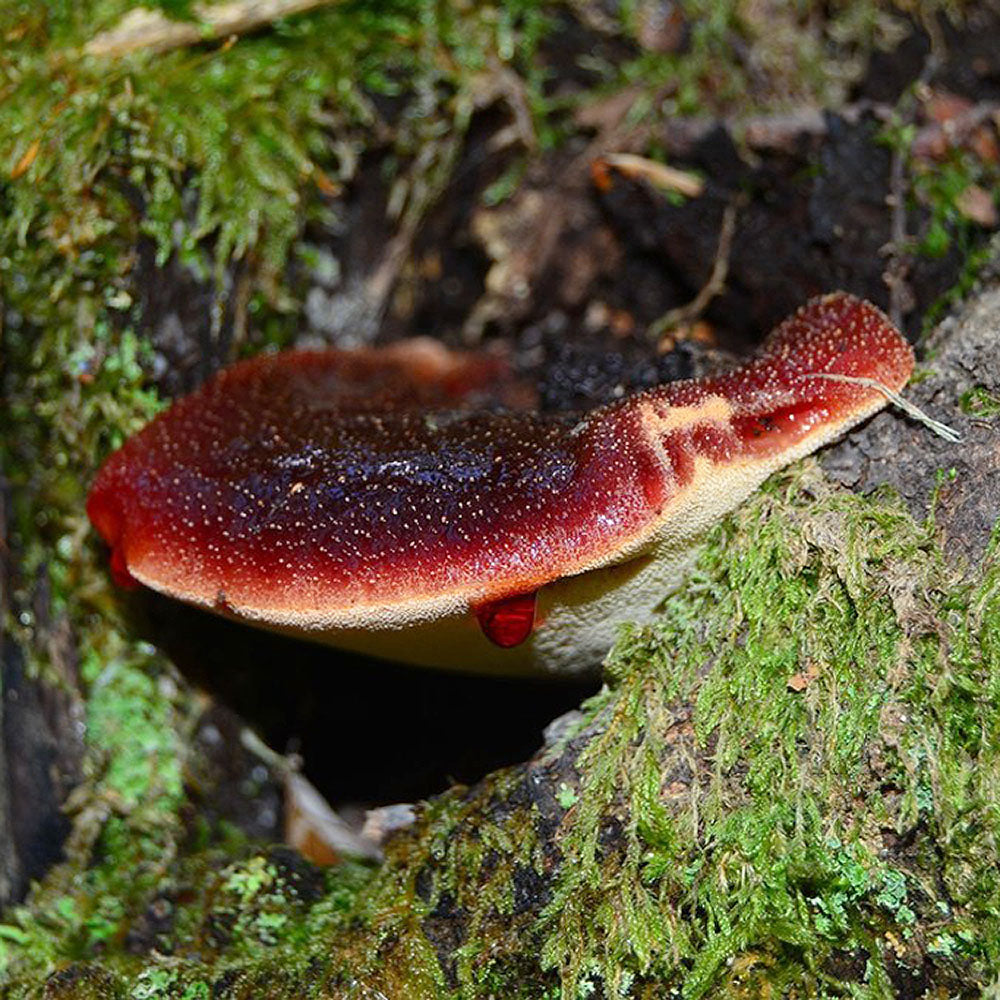
Fistulina hepatica produces large, bracket-shaped fruiting bodies ranging from 10 to 40 cm across, with a tongue-like or shelf-like form. The upper surface is red to reddish-brown with a rough, bumpy texture, while the lower surface lacks the pores typical of most bracket fungi. Instead, the hymenium consists of individual tube-like structures that can be separated by hand. Fresh fruiting bodies are soft, moist, and meat-like in texture, exuding a red juice when cut that resembles blood. Mature specimens become tougher and less succulent. The flesh is reddish with white or yellowish streaking. Spore print is pale brown. Beefsteak Fungus is unmistakable when fresh due to its unique combination of red coloration, soft texture, and red exudate.
Beefsteak Fungus Habitat and Ecology
Beefsteak Fungus is closely associated with mature oak and sweet chestnut trees, where it typically grows as a wound parasite and heartwood decay organism. It is found most commonly on veteran trees in parks, old woodlands, and hedgerows across Europe and parts of North America. Fistulina hepatica causes a brown rot in the heartwood that progresses slowly and may take decades to significantly weaken the host tree. The distinctive brown, compartmentalized decay it produces is highly valued in timber for furniture making and is known as "brown oak." Fruiting bodies appear annually on the lower trunk or major branches of infected trees, typically from late summer through autumn. The fungus is considered an indicator of ancient woodland and mature tree ecosystems.
Beefsteak Fungus Cultivation Considerations
Fistulina hepatica is not cultivated using standard mushroom cultivation methods. As a specialized tree pathogen, it requires living hardwood hosts for successful establishment and fruiting body production. Cultivation attempts typically involve inoculating oak or chestnut logs or living trees through drill holes or wound sites, followed by long-term monitoring as the fungus establishes in the host wood. Fruiting body development is unpredictable and may not occur for several years following inoculation, if at all. The species is cultivated primarily for ecological restoration projects, mycological research, and specialized timber production rather than for regular harvest. Log inoculation is the most practical approach for cultivators, though success rates are variable and results are measured in years rather than months.
Beefsteak Fungus Cultivation Parameters
|
Parameter |
Range |
|
Host Trees |
Oak (Quercus) and Chestnut (Castanea) species |
|
Inoculation Method |
Drill hole or wound site inoculation |
|
Establishment Time |
1 – 3 years for initial colonization |
|
Fruiting Body Development |
3 – 10+ years post-inoculation |
|
Environmental Conditions |
Outdoor, natural rainfall, seasonal variation |
|
Success Indicators |
Red staining and brown rot development in wood |
Beefsteak Fungus Scientific Interest
Fistulina hepatica is of significant interest in forest pathology due to its role in creating the prized "brown oak" timber through its distinctive brown rot decay pattern. The biochemical processes by which it produces its characteristic red pigments and exudates have been subjects of study, as has its unique hymenial structure that differs from typical polypore architecture. In conservation biology, the species serves as an indicator of veteran tree ecosystems and ancient woodland, making it relevant to habitat assessment and restoration efforts. Research has also examined its potential for controlled timber modification, though practical applications remain limited due to the extended timeframes involved in the process.
Beefsteak Fungus (Fistulina hepatica) Taxonomy
• Kingdom: Fungi
• Division: Basidiomycota
• Class: Agaricomycetes
• Order: Agaricales
• Family: Fistulinaceae
• Genus: Fistulina
• Species: Fistulina hepatica
• Common Names: Beefsteak Fungus, Ox Tongue, Poor Man’s Beefsteak
If you want to learn more about Beefsteak Fungus (Fistulina hepatica) please click here read our article.
Beefsteak Fungus (Fistulina hepatica) Liquid Culture Syringe
We have run out of stock for this item.
Description
Beefsteak Fungus (Fistulina hepatica) — Product Summary
• 10cc liquid culture syringe containing viable Fistulina hepatica mycelium
• Annual bracket fungus — produces large, flesh-like fruiting bodies on oak and chestnut
• Slow-growing species; fruiting body development occurs over extended periods
• Suitable for hardwood log inoculation, long-term cultivation projects, and ecological study
• Causes brown rot in host trees and produces distinctive reddish exudates
• Store refrigerated between 35–45°F; avoid freezing
• Ships with a sterile needle; use within 4–6 months of receipt
Beefsteak Fungus (Fistulina hepatica) Overview
Fistulina hepatica, commonly known as Beefsteak Fungus or Ox Tongue, is a distinctive wood-decaying bracket fungus found on mature hardwood trees across temperate regions of the Northern Hemisphere. It is the sole species in the genus Fistulina in most regions and is easily recognized by its flesh-like appearance, reddish coloration, and the characteristic red liquid that exudes from fresh cuts in the fruiting body. Beefsteak Fungus produces annual fruiting bodies that can reach substantial size on established host trees, and it is notable for causing a brown rot decay pattern in the heartwood of living oaks and chestnuts. The species has been prized as an edible fungus in parts of Europe for centuries, though it requires specific preparation techniques to achieve palatability.
Beefsteak Fungus Characteristics and Identification
Fistulina hepatica produces large, bracket-shaped fruiting bodies ranging from 10 to 40 cm across, with a tongue-like or shelf-like form. The upper surface is red to reddish-brown with a rough, bumpy texture, while the lower surface lacks the pores typical of most bracket fungi. Instead, the hymenium consists of individual tube-like structures that can be separated by hand. Fresh fruiting bodies are soft, moist, and meat-like in texture, exuding a red juice when cut that resembles blood. Mature specimens become tougher and less succulent. The flesh is reddish with white or yellowish streaking. Spore print is pale brown. Beefsteak Fungus is unmistakable when fresh due to its unique combination of red coloration, soft texture, and red exudate.
Beefsteak Fungus Habitat and Ecology
Beefsteak Fungus is closely associated with mature oak and sweet chestnut trees, where it typically grows as a wound parasite and heartwood decay organism. It is found most commonly on veteran trees in parks, old woodlands, and hedgerows across Europe and parts of North America. Fistulina hepatica causes a brown rot in the heartwood that progresses slowly and may take decades to significantly weaken the host tree. The distinctive brown, compartmentalized decay it produces is highly valued in timber for furniture making and is known as "brown oak." Fruiting bodies appear annually on the lower trunk or major branches of infected trees, typically from late summer through autumn. The fungus is considered an indicator of ancient woodland and mature tree ecosystems.
Beefsteak Fungus Cultivation Considerations
Fistulina hepatica is not cultivated using standard mushroom cultivation methods. As a specialized tree pathogen, it requires living hardwood hosts for successful establishment and fruiting body production. Cultivation attempts typically involve inoculating oak or chestnut logs or living trees through drill holes or wound sites, followed by long-term monitoring as the fungus establishes in the host wood. Fruiting body development is unpredictable and may not occur for several years following inoculation, if at all. The species is cultivated primarily for ecological restoration projects, mycological research, and specialized timber production rather than for regular harvest. Log inoculation is the most practical approach for cultivators, though success rates are variable and results are measured in years rather than months.
Beefsteak Fungus Cultivation Parameters
|
Parameter |
Range |
|
Host Trees |
Oak (Quercus) and Chestnut (Castanea) species |
|
Inoculation Method |
Drill hole or wound site inoculation |
|
Establishment Time |
1 – 3 years for initial colonization |
|
Fruiting Body Development |
3 – 10+ years post-inoculation |
|
Environmental Conditions |
Outdoor, natural rainfall, seasonal variation |
|
Success Indicators |
Red staining and brown rot development in wood |
Beefsteak Fungus Scientific Interest
Fistulina hepatica is of significant interest in forest pathology due to its role in creating the prized "brown oak" timber through its distinctive brown rot decay pattern. The biochemical processes by which it produces its characteristic red pigments and exudates have been subjects of study, as has its unique hymenial structure that differs from typical polypore architecture. In conservation biology, the species serves as an indicator of veteran tree ecosystems and ancient woodland, making it relevant to habitat assessment and restoration efforts. Research has also examined its potential for controlled timber modification, though practical applications remain limited due to the extended timeframes involved in the process.
Beefsteak Fungus (Fistulina hepatica) Taxonomy
• Kingdom: Fungi
• Division: Basidiomycota
• Class: Agaricomycetes
• Order: Agaricales
• Family: Fistulinaceae
• Genus: Fistulina
• Species: Fistulina hepatica
• Common Names: Beefsteak Fungus, Ox Tongue, Poor Man’s Beefsteak