


Description
- Brat Oyster Mushroom (Pleurotus ostreatus) liquid culture in a 10cc syringe — a rare, geographically-sourced strain with documented wild origins
- Originally isolated from Bratislava, Slovakia (2003); maintained in continuous cultivation at Out-Grow for over 12 years
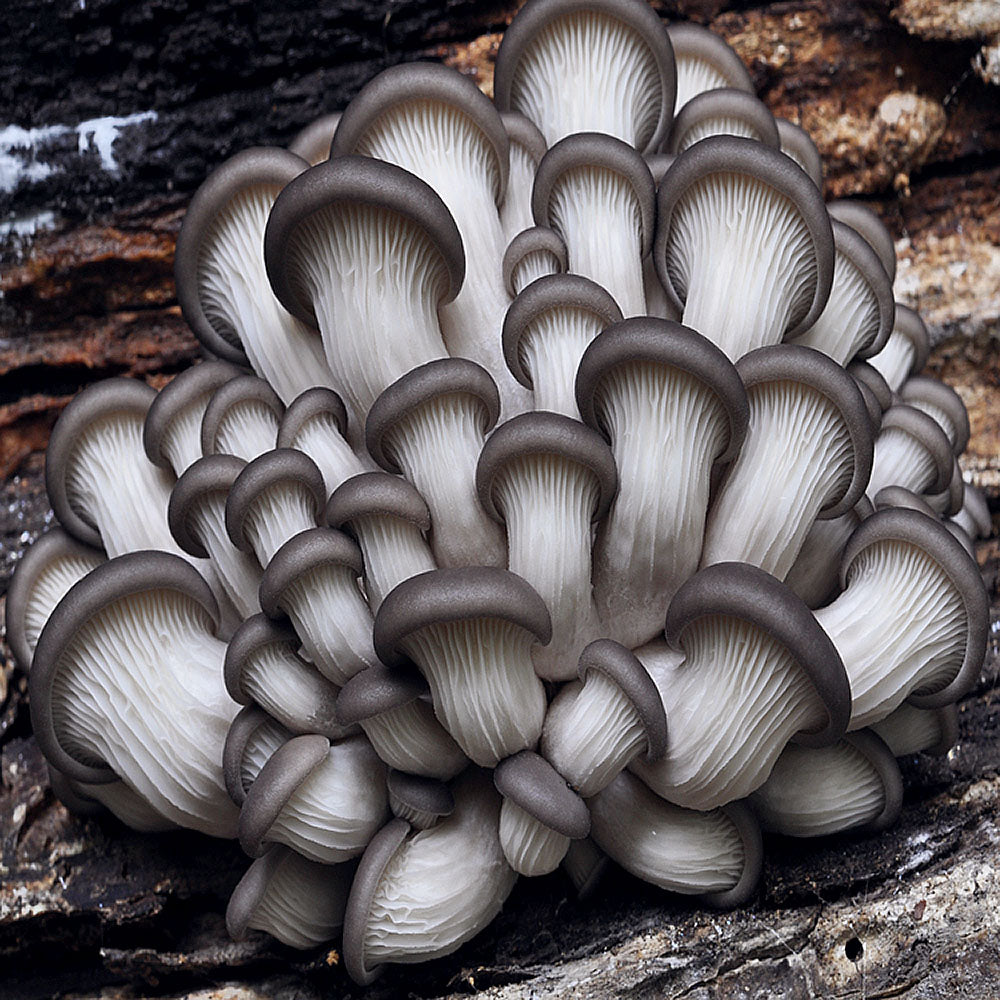
- Produces exceptionally dense, tight-clustered fruiting bodies with thick caps and characteristic steel-blue coloration
- Suitable for inoculating sterilized grain, agar petri dishes, straw, and hardwood sawdust substrates
- Cool-weather fruiting strain — performs best at lower fruiting temperatures consistent with its Central European origin
- Store refrigerated between 35–45°F; avoid freezing; use within 4–6 months of receipt
Brat Oyster Mushroom (Pleurotus ostreatus) Liquid Culture
Strain Overview
The Brat Oyster is a Pleurotus ostreatus liquid culture syringe derived from a wild isolate collected in Bratislava, Slovakia in 2003 — the name "Brat" being a direct reference to its city of origin. The strain was catalogued in association with mycologist S.P. Wasser and entered the cultivation community through culture trades on The Shroomery message board in the early-to-mid 2010s. Out-Grow has maintained this culture in continuous production for over 12 years and is currently the primary commercial source for this strain.
The Brat Oyster is distinguished from common blue oyster strains by its unusually compact cluster formation, producing dense bouquets of thick-capped fruiting bodies with a uniform steel-blue to slate-grey coloration. As a wild-origin cold-climate strain, it is well-suited to cool fruiting conditions and is a reliable performer for cultivators working in lower-temperature environments or during the fall and winter months.
Brat Oyster Mushroom — Cultivation Parameters
| Parameter | Range |
|---|---|
| Incubation Temperature | 70°F – 77°F |
| Incubation Time | 10 – 21 days |
| Fruiting Temperature | 45°F – 65°F |
| Fruiting Humidity | 85% – 95% |
| Pinning Time | 5 – 10 days |
| Total Fruiting Time | 7 – 14 days |
| Recommended Substrates | Straw, hardwood sawdust, masters mix, coffee grounds |
| Spore Print Color | White to lilac-grey |
Natural Habitat & Ecology
Pleurotus ostreatus is a saprophytic wood-decay fungus native to temperate and subtropical forests throughout Europe, Asia, and North America. In the wild it grows on dead and dying hardwood trees — particularly beech, oak, and elm — where it plays a primary role in cellulose and lignin decomposition. The Brat strain originates from the temperate deciduous forests of Central Europe, where seasonal temperatures drop significantly in autumn and winter. This cold-climate origin is reflected in its fruiting behavior: the strain initiates pins readily in cooler conditions and does not require the warmer fruiting temperatures typical of many commercially developed oyster strains.
Physical Characteristics
Fruiting bodies emerge in dense, stacked clusters from a shared base. Caps are fan-shaped to broadly convex, ranging from 2–12 cm in diameter depending on fruiting conditions, with an inrolled margin at pinning that flattens with maturity. Cap coloration at pinning is a deep blue-grey that transitions to slate or pale grey as the mushroom matures — a characteristic particularly pronounced when fruited at lower temperatures. Gill tissue is white and decurrent, running partially down the stipe. Flesh is firm and white throughout. The Brat strain is noted for producing tighter clusters and proportionally thicker caps compared to standard commercial blue oyster strains.
Edibility & Culinary Use
The Brat Oyster is an edible, choice culinary mushroom. It shares the flavor profile common to Pleurotus ostreatus — mild, savory, with a subtle anise-like aroma when fresh. Its firm flesh and dense cluster structure make it well-suited to high-heat cooking methods including sautéing, roasting, and stir-frying. As with all oyster mushrooms, harvest at or just before full cap extension for optimal flavor and texture; caps that have flattened fully and begun dropping spores are past peak quality.
Liquid Culture — Usage Instructions
This syringe contains living Pleurotus ostreatus mycelium suspended in a sterile nutrient broth. Shake the syringe gently before use to distribute mycelium evenly throughout the solution. Inject directly into sterilized grain jars or bags through a self-healing injection port, or transfer to agar petri dishes for isolation and expansion. Liquid culture inoculation accelerates colonization relative to spore-based methods by delivering established, actively growing mycelium directly to the substrate. Use sterile technique throughout inoculation to prevent contamination.
Storage
Store refrigerated at 35–45°F in a dark location. Do not freeze. Use within 4–6 months of receipt for best viability. Bring the syringe to room temperature for 30 minutes before use.
Taxonomy — Brat Oyster Mushroom (Pleurotus ostreatus)
- Kingdom: Fungi
- Division: Basidiomycota
- Class: Agaricomycetes
- Order: Agaricales
- Family: Pleurotaceae
- Genus: Pleurotus
- Species: P. ostreatus
- Strain: Brat (Bratislava, Slovakia, 2003)
Brat Oyster Mushroom (Pleurotus ostreatus) Liquid Culture Syringe
Product Overview
Key Features
Detailed Cultivation Guide
Storage Recommendations
Cultivation and Educational Value
Safety Information
Disclaimer
Description
- Brat Oyster Mushroom (Pleurotus ostreatus) liquid culture in a 10cc syringe — a rare, geographically-sourced strain with documented wild origins
- Originally isolated from Bratislava, Slovakia (2003); maintained in continuous cultivation at Out-Grow for over 12 years
- Produces exceptionally dense, tight-clustered fruiting bodies with thick caps and characteristic steel-blue coloration
- Suitable for inoculating sterilized grain, agar petri dishes, straw, and hardwood sawdust substrates
- Cool-weather fruiting strain — performs best at lower fruiting temperatures consistent with its Central European origin
- Store refrigerated between 35–45°F; avoid freezing; use within 4–6 months of receipt
Brat Oyster Mushroom (Pleurotus ostreatus) Liquid Culture
Strain Overview
The Brat Oyster is a Pleurotus ostreatus liquid culture syringe derived from a wild isolate collected in Bratislava, Slovakia in 2003 — the name "Brat" being a direct reference to its city of origin. The strain was catalogued in association with mycologist S.P. Wasser and entered the cultivation community through culture trades on The Shroomery message board in the early-to-mid 2010s. Out-Grow has maintained this culture in continuous production for over 12 years and is currently the primary commercial source for this strain.
The Brat Oyster is distinguished from common blue oyster strains by its unusually compact cluster formation, producing dense bouquets of thick-capped fruiting bodies with a uniform steel-blue to slate-grey coloration. As a wild-origin cold-climate strain, it is well-suited to cool fruiting conditions and is a reliable performer for cultivators working in lower-temperature environments or during the fall and winter months.
Brat Oyster Mushroom — Cultivation Parameters
| Parameter | Range |
|---|---|
| Incubation Temperature | 70°F – 77°F |
| Incubation Time | 10 – 21 days |
| Fruiting Temperature | 45°F – 65°F |
| Fruiting Humidity | 85% – 95% |
| Pinning Time | 5 – 10 days |
| Total Fruiting Time | 7 – 14 days |
| Recommended Substrates | Straw, hardwood sawdust, masters mix, coffee grounds |
| Spore Print Color | White to lilac-grey |
Natural Habitat & Ecology
Pleurotus ostreatus is a saprophytic wood-decay fungus native to temperate and subtropical forests throughout Europe, Asia, and North America. In the wild it grows on dead and dying hardwood trees — particularly beech, oak, and elm — where it plays a primary role in cellulose and lignin decomposition. The Brat strain originates from the temperate deciduous forests of Central Europe, where seasonal temperatures drop significantly in autumn and winter. This cold-climate origin is reflected in its fruiting behavior: the strain initiates pins readily in cooler conditions and does not require the warmer fruiting temperatures typical of many commercially developed oyster strains.
Physical Characteristics
Fruiting bodies emerge in dense, stacked clusters from a shared base. Caps are fan-shaped to broadly convex, ranging from 2–12 cm in diameter depending on fruiting conditions, with an inrolled margin at pinning that flattens with maturity. Cap coloration at pinning is a deep blue-grey that transitions to slate or pale grey as the mushroom matures — a characteristic particularly pronounced when fruited at lower temperatures. Gill tissue is white and decurrent, running partially down the stipe. Flesh is firm and white throughout. The Brat strain is noted for producing tighter clusters and proportionally thicker caps compared to standard commercial blue oyster strains.
Edibility & Culinary Use
The Brat Oyster is an edible, choice culinary mushroom. It shares the flavor profile common to Pleurotus ostreatus — mild, savory, with a subtle anise-like aroma when fresh. Its firm flesh and dense cluster structure make it well-suited to high-heat cooking methods including sautéing, roasting, and stir-frying. As with all oyster mushrooms, harvest at or just before full cap extension for optimal flavor and texture; caps that have flattened fully and begun dropping spores are past peak quality.
Liquid Culture — Usage Instructions
This syringe contains living Pleurotus ostreatus mycelium suspended in a sterile nutrient broth. Shake the syringe gently before use to distribute mycelium evenly throughout the solution. Inject directly into sterilized grain jars or bags through a self-healing injection port, or transfer to agar petri dishes for isolation and expansion. Liquid culture inoculation accelerates colonization relative to spore-based methods by delivering established, actively growing mycelium directly to the substrate. Use sterile technique throughout inoculation to prevent contamination.
Storage
Store refrigerated at 35–45°F in a dark location. Do not freeze. Use within 4–6 months of receipt for best viability. Bring the syringe to room temperature for 30 minutes before use.
Taxonomy — Brat Oyster Mushroom (Pleurotus ostreatus)
- Kingdom: Fungi
- Division: Basidiomycota
- Class: Agaricomycetes
- Order: Agaricales
- Family: Pleurotaceae
- Genus: Pleurotus
- Species: P. ostreatus
- Strain: Brat (Bratislava, Slovakia, 2003)