


Description
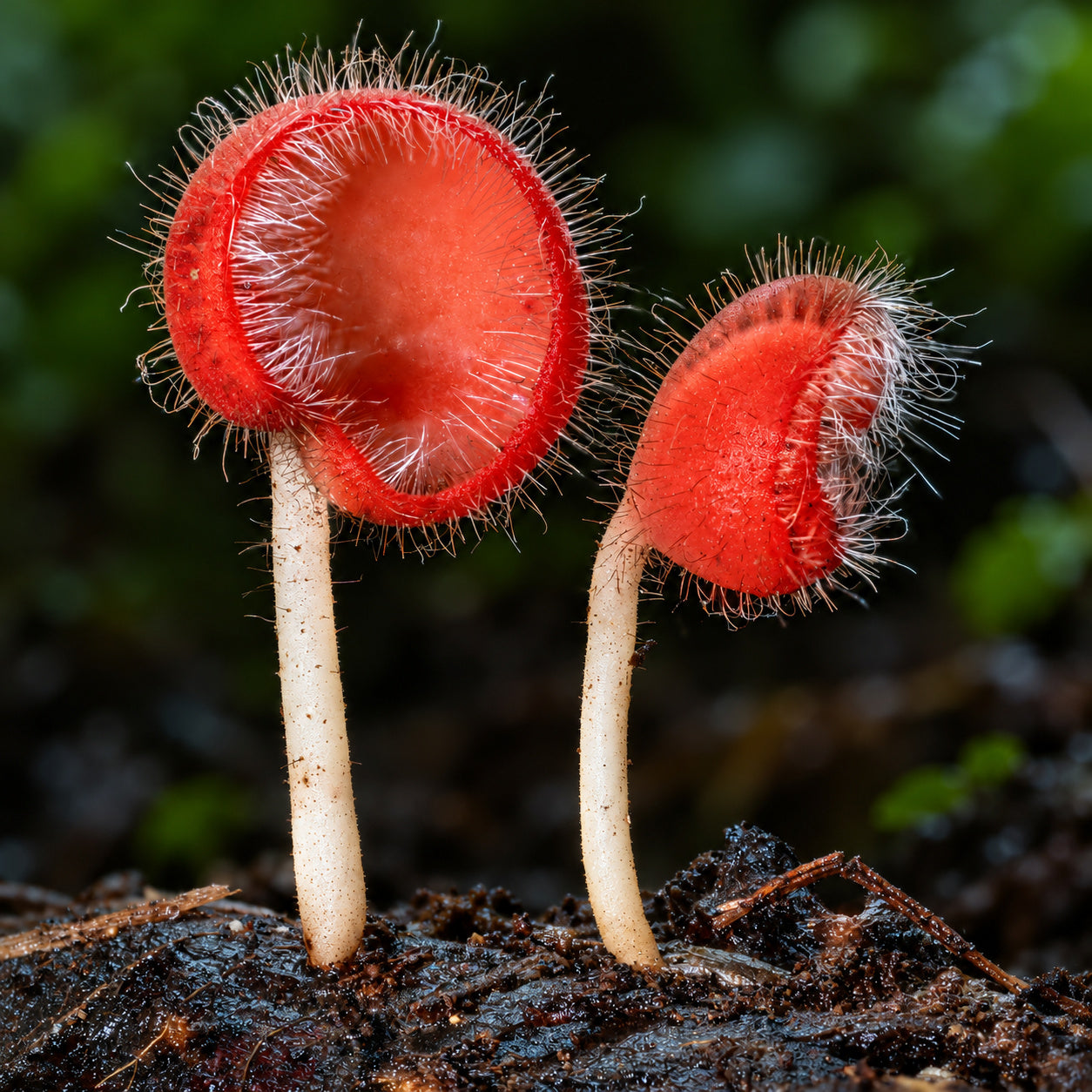
Bristly Tropical Cup (Cookeina tricholoma) is one of the tropics' most striking cup fungi, a hairy, goblet-shaped ascomycete, and this liquid culture makes it available as verified living stock. Out-Grow's liquid culture syringe delivers live, actively growing Cookeina tricholoma mycelium in sterile nutrient solution.
The species is saprotrophic on dead wood, so no living host is required, and mycelial culture on agar and in liquid media is demonstrated in peer-reviewed research. No reproducible protocol for fruiting the cups under controlled conditions has been published. The culture is proven; the fruiting is the frontier.
Why Work With Bristly Tropical Cup?
Living ascomycete cultures beyond the standard morels and Pezizas are scarce, and Cookeina is a showpiece genus of tropical mycology. Maintained stock supports developmental studies of apothecia, tropical decomposition ecology, and, for the ambitious, fruiting trials on sterilized wood-based substrates where the literature currently ends.
Working Conditions:
Expand on MEA or PDA at 75 to 85 F; this is a lowland tropical species and prefers real warmth. Liquid culture on malt-based broth is documented. For fruiting experiments, high humidity and hardwood substrate mirror its natural habit on fallen tropical wood.
Key Characteristics of Bristly Tropical Cup (Cookeina tricholoma):
- Ecology: Tropical saprotroph fruiting as bristly, stalked cups on dead hardwood.
- Culture Behavior: Agar and liquid culture demonstrated in peer-reviewed research; prefers warm incubation.
- Research Value: A charismatic ascomycete for developmental and tropical ecology work, with fruiting still unconquered.
Taxonomy of Bristly Tropical Cup (Cookeina tricholoma):
- Kingdom: Fungi
- Phylum: Ascomycota
- Class: Pezizomycetes
- Order: Pezizales
- Family: Sarcoscyphaceae
- Genus: Cookeina
- Species: Cookeina tricholoma
Storage and Usage Tips:
Store your Bristly Tropical Cup liquid culture syringe in a cool, dark location, but do not chill it hard; tropical taxa resent cold. Expand promptly at warm incubation.
Bristly Tropical Cup (Cookeina tricholoma) Liquid Culture Syringe
Description
Bristly Tropical Cup (Cookeina tricholoma) is one of the tropics' most striking cup fungi, a hairy, goblet-shaped ascomycete, and this liquid culture makes it available as verified living stock. Out-Grow's liquid culture syringe delivers live, actively growing Cookeina tricholoma mycelium in sterile nutrient solution.
The species is saprotrophic on dead wood, so no living host is required, and mycelial culture on agar and in liquid media is demonstrated in peer-reviewed research. No reproducible protocol for fruiting the cups under controlled conditions has been published. The culture is proven; the fruiting is the frontier.
Why Work With Bristly Tropical Cup?
Living ascomycete cultures beyond the standard morels and Pezizas are scarce, and Cookeina is a showpiece genus of tropical mycology. Maintained stock supports developmental studies of apothecia, tropical decomposition ecology, and, for the ambitious, fruiting trials on sterilized wood-based substrates where the literature currently ends.
Working Conditions:
Expand on MEA or PDA at 75 to 85 F; this is a lowland tropical species and prefers real warmth. Liquid culture on malt-based broth is documented. For fruiting experiments, high humidity and hardwood substrate mirror its natural habit on fallen tropical wood.
Key Characteristics of Bristly Tropical Cup (Cookeina tricholoma):
- Ecology: Tropical saprotroph fruiting as bristly, stalked cups on dead hardwood.
- Culture Behavior: Agar and liquid culture demonstrated in peer-reviewed research; prefers warm incubation.
- Research Value: A charismatic ascomycete for developmental and tropical ecology work, with fruiting still unconquered.
Taxonomy of Bristly Tropical Cup (Cookeina tricholoma):
- Kingdom: Fungi
- Phylum: Ascomycota
- Class: Pezizomycetes
- Order: Pezizales
- Family: Sarcoscyphaceae
- Genus: Cookeina
- Species: Cookeina tricholoma
Storage and Usage Tips:
Store your Bristly Tropical Cup liquid culture syringe in a cool, dark location, but do not chill it hard; tropical taxa resent cold. Expand promptly at warm incubation.