


Description
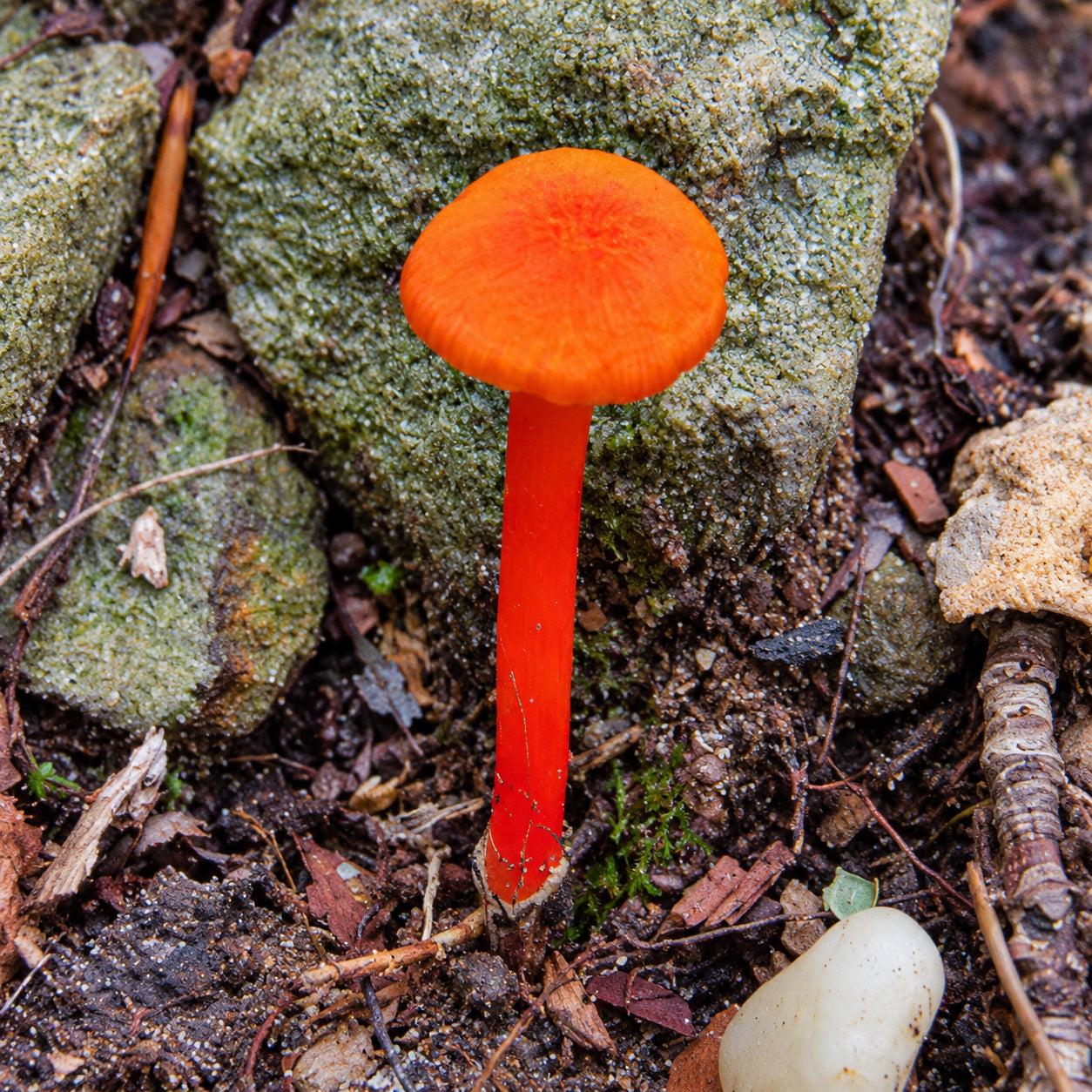
Goblet Waxcap (Hygrocybe cantharellus) is a small scarlet waxcap with decurrent gills and a chanterelle-like stance, and this liquid culture delivers verified living stock of a group nearly absent from culture collections. Out-Grow's liquid culture syringe contains live, actively growing Hygrocybe cantharellus mycelium in sterile nutrient solution.
No waxcap has been conventionally cultivated, and no fruiting protocol exists for this species or its close relatives. Waxcap nutritional ecology, likely a subtle biotrophic relationship with grassland plants and mosses, remains an open research question, which is precisely what makes maintained living material valuable.
Why Work With Goblet Waxcap?
The waxcap grasslands are a conservation priority across Europe and beyond, and research on the group is limited by one thing above all: almost nobody has the living fungus. This culture puts H. cantharellus mycelium in reach for nutrition studies, synthesis experiments with grassland plants, and preservation of a lineage that habitat loss is actively erasing.
Working Conditions:
Expand on MEA at 60 to 70 F. Expect slow, delicate, pale growth typical of the genus. Treat it as preservation stock: transfer early from clean margins, seal well, and hold backups before attempting anything experimental.
Key Characteristics of Goblet Waxcap (Hygrocybe cantharellus):
- Ecology: Waxcap of old grasslands and mossy ground, fruiting in small scarlet goblets.
- Culture Behavior: Slow, low, delicate growth demanding cool incubation and patient handling.
- Conservation Value: Living material from a fungal group whose grassland habitats are in global decline.
Taxonomy of Goblet Waxcap (Hygrocybe cantharellus):
- Kingdom: Fungi
- Phylum: Basidiomycota
- Class: Agaricomycetes
- Order: Agaricales
- Family: Hygrophoraceae
- Genus: Hygrocybe
- Species: Hygrocybe cantharellus
Storage and Usage Tips:
Store your Goblet Waxcap liquid culture syringe cool and dark, expand promptly, and maintain backups from the first transfer.
Goblet Waxcap (Hygrocybe cantharellus) Liquid Culture Syringe
Description
Goblet Waxcap (Hygrocybe cantharellus) is a small scarlet waxcap with decurrent gills and a chanterelle-like stance, and this liquid culture delivers verified living stock of a group nearly absent from culture collections. Out-Grow's liquid culture syringe contains live, actively growing Hygrocybe cantharellus mycelium in sterile nutrient solution.
No waxcap has been conventionally cultivated, and no fruiting protocol exists for this species or its close relatives. Waxcap nutritional ecology, likely a subtle biotrophic relationship with grassland plants and mosses, remains an open research question, which is precisely what makes maintained living material valuable.
Why Work With Goblet Waxcap?
The waxcap grasslands are a conservation priority across Europe and beyond, and research on the group is limited by one thing above all: almost nobody has the living fungus. This culture puts H. cantharellus mycelium in reach for nutrition studies, synthesis experiments with grassland plants, and preservation of a lineage that habitat loss is actively erasing.
Working Conditions:
Expand on MEA at 60 to 70 F. Expect slow, delicate, pale growth typical of the genus. Treat it as preservation stock: transfer early from clean margins, seal well, and hold backups before attempting anything experimental.
Key Characteristics of Goblet Waxcap (Hygrocybe cantharellus):
- Ecology: Waxcap of old grasslands and mossy ground, fruiting in small scarlet goblets.
- Culture Behavior: Slow, low, delicate growth demanding cool incubation and patient handling.
- Conservation Value: Living material from a fungal group whose grassland habitats are in global decline.
Taxonomy of Goblet Waxcap (Hygrocybe cantharellus):
- Kingdom: Fungi
- Phylum: Basidiomycota
- Class: Agaricomycetes
- Order: Agaricales
- Family: Hygrophoraceae
- Genus: Hygrocybe
- Species: Hygrocybe cantharellus
Storage and Usage Tips:
Store your Goblet Waxcap liquid culture syringe cool and dark, expand promptly, and maintain backups from the first transfer.