


Description
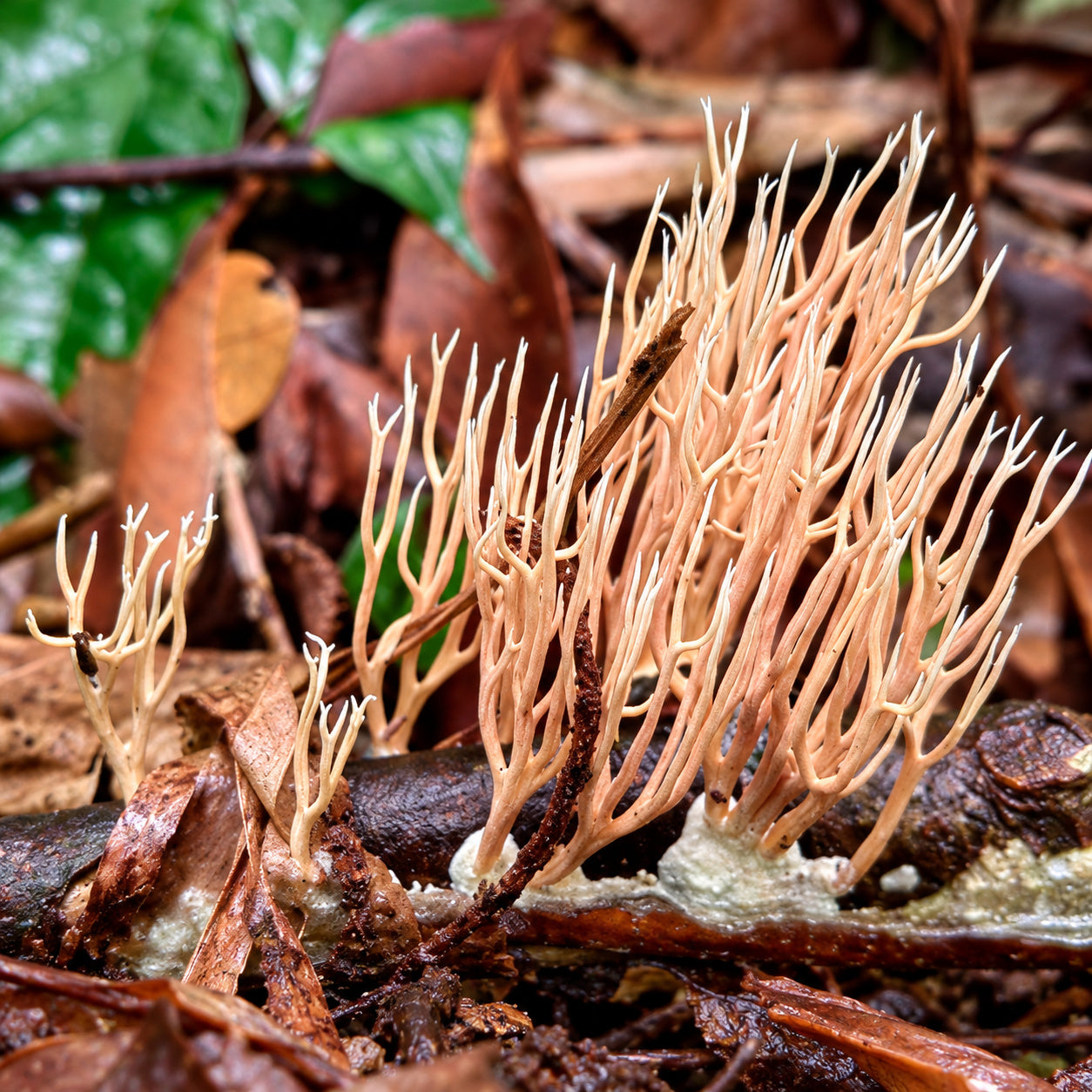
Forked Coral (Lentaria surculus) is a delicate branching coral fungus of woody debris, and this liquid culture delivers verified living stock of a coral, a group almost never available in culture. Out-Grow's liquid culture syringe contains live, actively growing Lentaria surculus mycelium in sterile nutrient solution.
No cultivation protocols exist for this species, a research priority gap rather than a barrier: L. surculus is a wood-decomposing saprotroph with no mycorrhizal dependency, which puts it on the cultivable side of the ledger that most corals, being mycorrhizal, never reach.
Why Work With Forked Coral?
Coral fungi are conspicuous in the field and nearly absent from culture collections, because so many are mycorrhizal. A saprotrophic coral in culture is the exception that opens doors: developmental study of coralloid fruiting architecture, decomposition ecology, and fruiting trials on lignocellulosic substrate that no one has published.
Working Conditions:
Expand on MEA or PDA at 68 to 78 F. Expect fine, whitish, slower-paced growth. For fruiting attempts, well-rotted hardwood debris under high humidity reflects its natural microhabitat on woody litter.
Key Characteristics of Forked Coral (Lentaria surculus):
- Ecology: Saprotroph of woody debris and litter, fruiting as pale, forked coral structures.
- Culture Behavior: Fine, deliberate mycelial growth on standard media; a culture that rewards patience.
- Rarity Value: One of very few coral fungi obtainable as living culture, thanks to its saprotrophic ecology.
Taxonomy of Forked Coral (Lentaria surculus):
- Kingdom: Fungi
- Phylum: Basidiomycota
- Class: Agaricomycetes
- Order: Gomphales
- Family: Gomphaceae
- Genus: Lentaria
- Species: Lentaria surculus
Storage and Usage Tips:
Store your Forked Coral liquid culture syringe in a cool, dark location and expand promptly onto fresh agar; maintain backups, as replacement coral cultures are scarce.
Forked Coral (Lentaria surculus) Liquid Culture Syringe
Description
Forked Coral (Lentaria surculus) is a delicate branching coral fungus of woody debris, and this liquid culture delivers verified living stock of a coral, a group almost never available in culture. Out-Grow's liquid culture syringe contains live, actively growing Lentaria surculus mycelium in sterile nutrient solution.
No cultivation protocols exist for this species, a research priority gap rather than a barrier: L. surculus is a wood-decomposing saprotroph with no mycorrhizal dependency, which puts it on the cultivable side of the ledger that most corals, being mycorrhizal, never reach.
Why Work With Forked Coral?
Coral fungi are conspicuous in the field and nearly absent from culture collections, because so many are mycorrhizal. A saprotrophic coral in culture is the exception that opens doors: developmental study of coralloid fruiting architecture, decomposition ecology, and fruiting trials on lignocellulosic substrate that no one has published.
Working Conditions:
Expand on MEA or PDA at 68 to 78 F. Expect fine, whitish, slower-paced growth. For fruiting attempts, well-rotted hardwood debris under high humidity reflects its natural microhabitat on woody litter.
Key Characteristics of Forked Coral (Lentaria surculus):
- Ecology: Saprotroph of woody debris and litter, fruiting as pale, forked coral structures.
- Culture Behavior: Fine, deliberate mycelial growth on standard media; a culture that rewards patience.
- Rarity Value: One of very few coral fungi obtainable as living culture, thanks to its saprotrophic ecology.
Taxonomy of Forked Coral (Lentaria surculus):
- Kingdom: Fungi
- Phylum: Basidiomycota
- Class: Agaricomycetes
- Order: Gomphales
- Family: Gomphaceae
- Genus: Lentaria
- Species: Lentaria surculus
Storage and Usage Tips:
Store your Forked Coral liquid culture syringe in a cool, dark location and expand promptly onto fresh agar; maintain backups, as replacement coral cultures are scarce.