


Description
Product Summary
• 10cc liquid culture syringe containing viable Hericium erinaceus mycelium
• Suitable for inoculating sterilized grain, agar petri dishes, and hardwood-based substrates
• Strain selected for mycelial health and fruiting consistency
• Store refrigerated between 35–45°F; avoid freezing
• Saprophytic species; does not require a living host to fruit
• Ships with a sterile needle; use within 4–6 months of receipt
Lions Mane (Hericium erinaceus) Overview
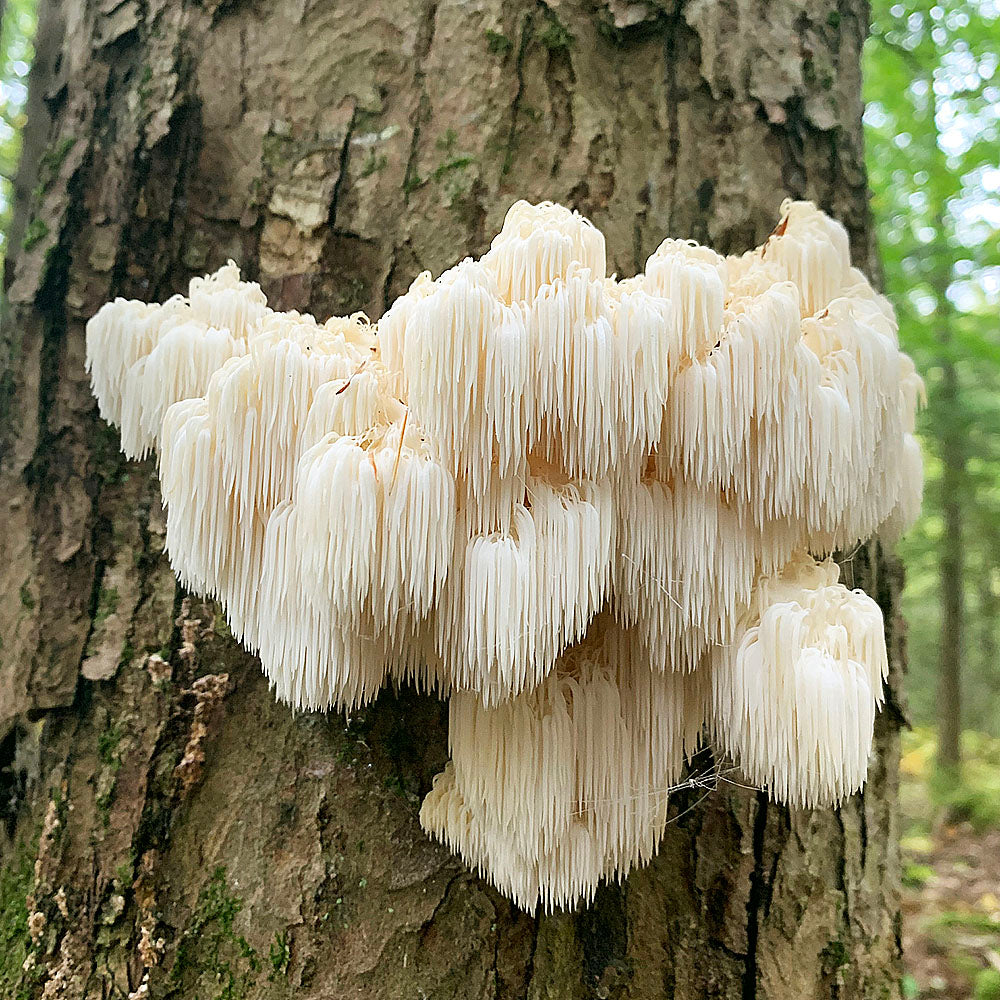
Hericium erinaceus, commonly called Lions Mane, is a distinctive saprophytic fungus found across temperate regions of North America, Europe, and Asia. It grows on the wounds and decaying wood of hardwood trees, particularly oak, beech, walnut, and maple. The fruiting body of Hericium erinaceus consists of cascading white spines rather than a traditional cap-and-gill structure, making it one of the more visually identifiable species in the wild.
Lions Mane Characteristics and Identification
Hericium erinaceus forms a single, unbranched clump of pendant spines typically ranging from 5 to 40 cm in diameter. Spines are white to cream when fresh, yellowing with age. Flesh is white, firm, and moist. Lions Mane produces a white spore print and lacks a distinct odor. It is not easily confused with other species due to its morphology, though related species such as Hericium coralloides and Hericium americanum share similar growth habits.
Lions Mane Habitat and Ecology
In the wild, Hericium erinaceus colonizes wounds on living hardwood trees and continues fruiting on standing dead wood and logs. Lions Mane functions as both a parasite and saprotroph depending on host condition. It fruits predominantly in late summer through early winter in temperate climates, preferring cooler temperatures between 55–75°F. Hericium erinaceus is found most commonly at higher elevations or in northern hardwood forests during fall.
Lions Mane Cultivation Considerations
Hericium erinaceus is well-suited to small-scale and home cultivation. Lions Mane colonizes sterilized hardwood grain and hardwood-supplemented substrates effectively. Fruiting is initiated by high humidity, fresh air exchange, and temperatures in the 60–75°F range. Hericium erinaceus is sensitive to CO₂ accumulation; inadequate air exchange commonly results in elongated, underdeveloped spines rather than dense, compact fruiting bodies. Substrate options include supplemented hardwood sawdust, masters mix, and pasteurized hardwood logs. Lions Mane does not perform well on straw or primarily cellulosic substrates.
Lions Mane Cultivation Parameters
|
Parameter |
Range |
|
Incubation Temperature |
72°F – 78°F |
|
Incubation Time |
10 – 16 days |
|
Fruiting Temperature |
60°F – 74°F |
|
Fruiting Humidity |
85% – 95% |
|
Pinning Time |
5 – 12 days |
|
Total Fruiting Time |
10 – 20 days |
Lions Mane Scientific Interest
Hericium erinaceus has been the subject of ongoing research interest due to the presence of hericenones and erinacines, compounds found in the fruiting body and mycelium respectively. Research into Lions Mane and these compounds is active, though clinical applications remain under investigation. Out-Grow makes no health claims regarding this or any other species we carry.
Lions Mane (Hericium erinaceus) Taxonomy
|
Kingdom |
Fungi |
|
Phylum |
Basidiomycota |
|
Class |
Agaricomycetes |
|
Order |
Russulales |
|
Family |
Hericiaceae |
|
Genus |
Hericium |
|
Species |
H. erinaceus |
|
Common Names |
Lions Mane, Monkey Head, Bearded Tooth, Pom Pom Mushroom |
Lions Mane (Hericium erinaceus) Liquid Culture Syringe
Product Overview
Key Features
Detailed Cultivation Guide
Storage Recommendations
Cultivation and Educational Value
Safety Information
Disclaimer
Description
Product Summary
• 10cc liquid culture syringe containing viable Hericium erinaceus mycelium
• Suitable for inoculating sterilized grain, agar petri dishes, and hardwood-based substrates
• Strain selected for mycelial health and fruiting consistency
• Store refrigerated between 35–45°F; avoid freezing
• Saprophytic species; does not require a living host to fruit
• Ships with a sterile needle; use within 4–6 months of receipt
Lions Mane (Hericium erinaceus) Overview
Hericium erinaceus, commonly called Lions Mane, is a distinctive saprophytic fungus found across temperate regions of North America, Europe, and Asia. It grows on the wounds and decaying wood of hardwood trees, particularly oak, beech, walnut, and maple. The fruiting body of Hericium erinaceus consists of cascading white spines rather than a traditional cap-and-gill structure, making it one of the more visually identifiable species in the wild.
Lions Mane Characteristics and Identification
Hericium erinaceus forms a single, unbranched clump of pendant spines typically ranging from 5 to 40 cm in diameter. Spines are white to cream when fresh, yellowing with age. Flesh is white, firm, and moist. Lions Mane produces a white spore print and lacks a distinct odor. It is not easily confused with other species due to its morphology, though related species such as Hericium coralloides and Hericium americanum share similar growth habits.
Lions Mane Habitat and Ecology
In the wild, Hericium erinaceus colonizes wounds on living hardwood trees and continues fruiting on standing dead wood and logs. Lions Mane functions as both a parasite and saprotroph depending on host condition. It fruits predominantly in late summer through early winter in temperate climates, preferring cooler temperatures between 55–75°F. Hericium erinaceus is found most commonly at higher elevations or in northern hardwood forests during fall.
Lions Mane Cultivation Considerations
Hericium erinaceus is well-suited to small-scale and home cultivation. Lions Mane colonizes sterilized hardwood grain and hardwood-supplemented substrates effectively. Fruiting is initiated by high humidity, fresh air exchange, and temperatures in the 60–75°F range. Hericium erinaceus is sensitive to CO₂ accumulation; inadequate air exchange commonly results in elongated, underdeveloped spines rather than dense, compact fruiting bodies. Substrate options include supplemented hardwood sawdust, masters mix, and pasteurized hardwood logs. Lions Mane does not perform well on straw or primarily cellulosic substrates.
Lions Mane Cultivation Parameters
|
Parameter |
Range |
|
Incubation Temperature |
72°F – 78°F |
|
Incubation Time |
10 – 16 days |
|
Fruiting Temperature |
60°F – 74°F |
|
Fruiting Humidity |
85% – 95% |
|
Pinning Time |
5 – 12 days |
|
Total Fruiting Time |
10 – 20 days |
Lions Mane Scientific Interest
Hericium erinaceus has been the subject of ongoing research interest due to the presence of hericenones and erinacines, compounds found in the fruiting body and mycelium respectively. Research into Lions Mane and these compounds is active, though clinical applications remain under investigation. Out-Grow makes no health claims regarding this or any other species we carry.
Lions Mane (Hericium erinaceus) Taxonomy
|
Kingdom |
Fungi |
|
Phylum |
Basidiomycota |
|
Class |
Agaricomycetes |
|
Order |
Russulales |
|
Family |
Hericiaceae |
|
Genus |
Hericium |
|
Species |
H. erinaceus |
|
Common Names |
Lions Mane, Monkey Head, Bearded Tooth, Pom Pom Mushroom |