


Description
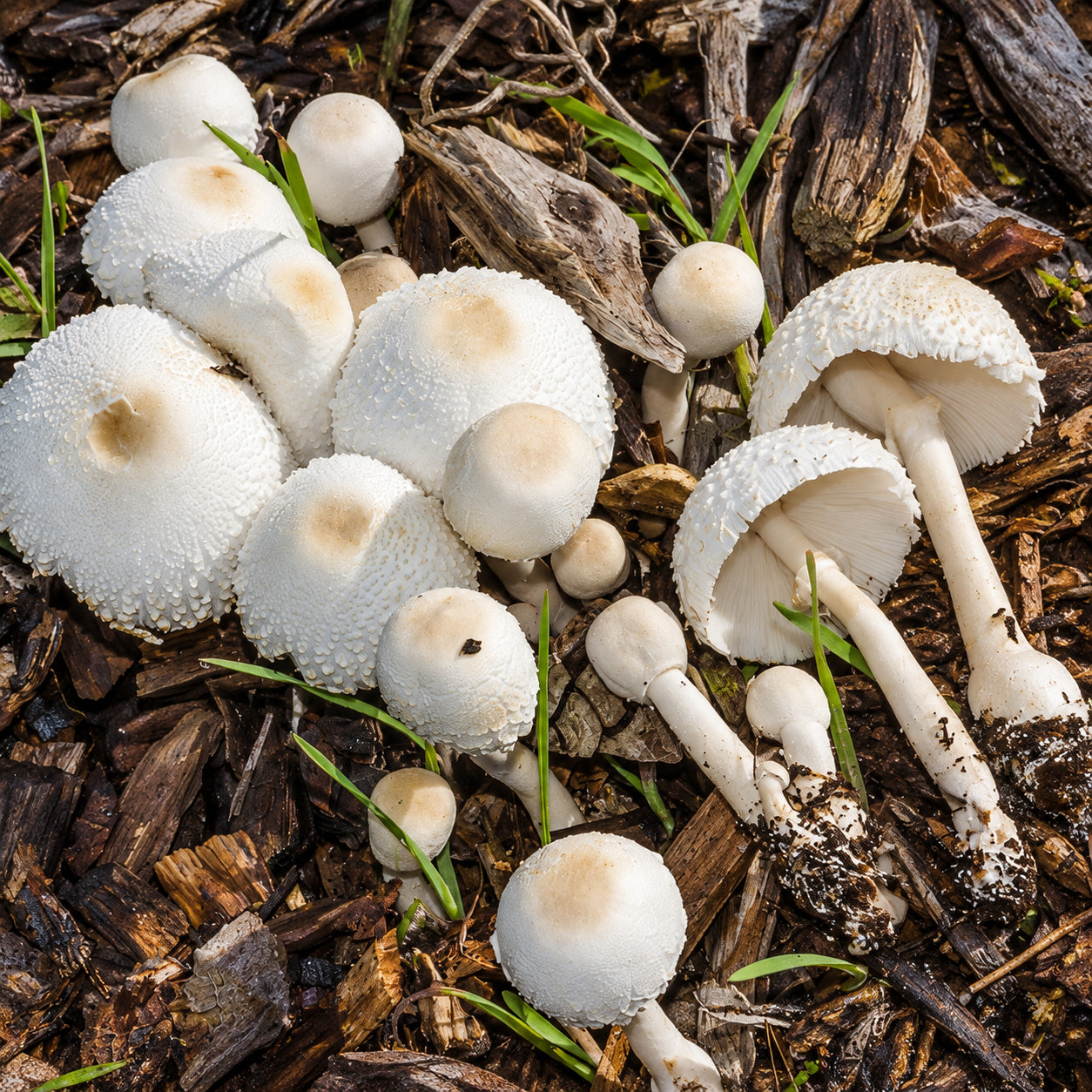
Onion-Stalk Parasol (Leucocoprinus cepistipes) is the pale parasol that appears in greenhouses, plant pots, and mulch beds around the world, and this liquid culture delivers verified living stock of one of the most cultivation-willing species on our rare list. Out-Grow's liquid culture syringe contains live, actively growing Leucocoprinus cepistipes mycelium in sterile nutrient solution.
No standardized protocol has been published, but this species' record speaks for itself: it fruits eagerly in greenhouse conditions wherever rich, warm organic matter accumulates. Experimentally, it is one of the most plausible first-fruiting candidates in this catalog.
Why Grow Onion-Stalk Parasol?
If you want a rare-list species that will actually show you mushrooms, this is a leading candidate: a warmth-loving saprotroph famous for volunteering in pots and beds. Rich compost-based substrates under greenhouse conditions replicate exactly the environments where it fruits uninvited. Note plainly: this is a display and study species, not an edible.
Working Conditions:
Expand on MEA or PDA at 75 to 85 F. For fruiting trials, rich composted substrate or spent plant potting mix, warm and humid, mirrors its volunteer habit. Expect fast, willing colonization.
Key Characteristics of Onion-Stalk Parasol (Leucocoprinus cepistipes):
- Ecology: Warmth-loving saprotroph of rich organic matter, famous for greenhouse and houseplant appearances.
- Culture Behavior: Fast, eager colonization on standard media and compost-based substrates.
- Grower Value: Arguably the most fruiting-willing species on this rare list, ideal for display cultivation.
Taxonomy of Onion-Stalk Parasol (Leucocoprinus cepistipes):
- Kingdom: Fungi
- Phylum: Basidiomycota
- Class: Agaricomycetes
- Order: Agaricales
- Family: Agaricaceae
- Genus: Leucocoprinus
- Species: Leucocoprinus cepistipes
Storage and Usage Tips:
Store your Onion-Stalk Parasol liquid culture syringe in a cool, dark location and use within six months. It expands quickly once warm.
Onion-Stalk Parasol (Leucocoprinus cepistipes) Liquid Culture Syringe
Description
Onion-Stalk Parasol (Leucocoprinus cepistipes) is the pale parasol that appears in greenhouses, plant pots, and mulch beds around the world, and this liquid culture delivers verified living stock of one of the most cultivation-willing species on our rare list. Out-Grow's liquid culture syringe contains live, actively growing Leucocoprinus cepistipes mycelium in sterile nutrient solution.
No standardized protocol has been published, but this species' record speaks for itself: it fruits eagerly in greenhouse conditions wherever rich, warm organic matter accumulates. Experimentally, it is one of the most plausible first-fruiting candidates in this catalog.
Why Grow Onion-Stalk Parasol?
If you want a rare-list species that will actually show you mushrooms, this is a leading candidate: a warmth-loving saprotroph famous for volunteering in pots and beds. Rich compost-based substrates under greenhouse conditions replicate exactly the environments where it fruits uninvited. Note plainly: this is a display and study species, not an edible.
Working Conditions:
Expand on MEA or PDA at 75 to 85 F. For fruiting trials, rich composted substrate or spent plant potting mix, warm and humid, mirrors its volunteer habit. Expect fast, willing colonization.
Key Characteristics of Onion-Stalk Parasol (Leucocoprinus cepistipes):
- Ecology: Warmth-loving saprotroph of rich organic matter, famous for greenhouse and houseplant appearances.
- Culture Behavior: Fast, eager colonization on standard media and compost-based substrates.
- Grower Value: Arguably the most fruiting-willing species on this rare list, ideal for display cultivation.
Taxonomy of Onion-Stalk Parasol (Leucocoprinus cepistipes):
- Kingdom: Fungi
- Phylum: Basidiomycota
- Class: Agaricomycetes
- Order: Agaricales
- Family: Agaricaceae
- Genus: Leucocoprinus
- Species: Leucocoprinus cepistipes
Storage and Usage Tips:
Store your Onion-Stalk Parasol liquid culture syringe in a cool, dark location and use within six months. It expands quickly once warm.