


Description
Oyster Mushroom Cultures 5 Pack — Product Summary
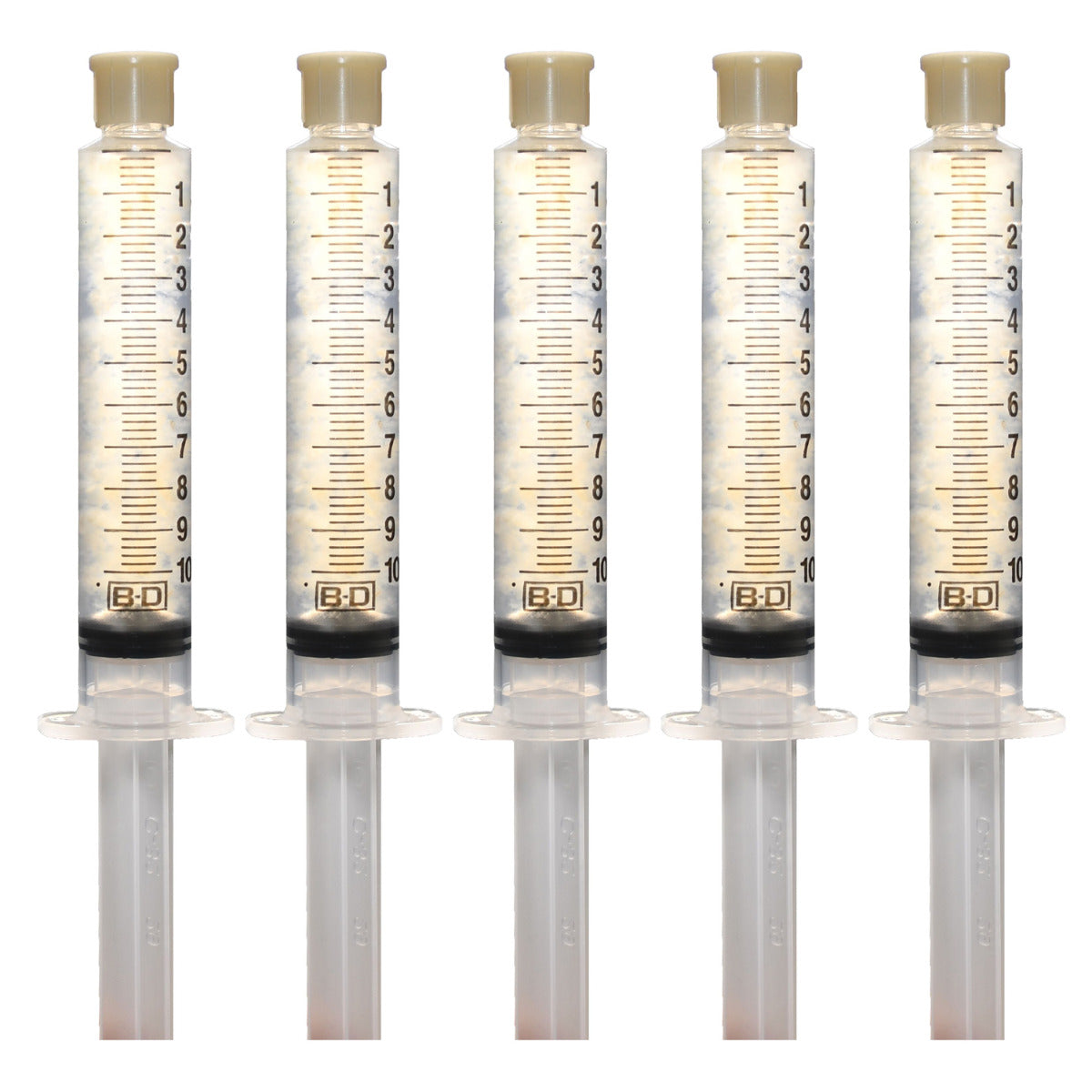
• Five 10–12cc liquid culture syringes, each containing a distinct oyster mushroom variety
• Includes: Blue Oyster (Pleurotus columbinus), Pearl Oyster (Pleurotus ostreatus), Pink Oyster (Pleurotus djamor), Brown Oyster (Pleurotus ostreatus), and Gold Oyster (Pleurotus citrinopileatus)
• Each syringe contains viable mycelium suspended in a sterile nutrient broth
• All five varieties colonize straw, hardwood sawdust, and supplemented hardwood substrates
• Temperature preferences vary by variety — see individual cultivation notes below
• Store refrigerated between 35–45°F; avoid freezing
• Ships with sterile needles; use within 4–6 months of receipt
Oyster Mushroom Liquid Cultures — Pack Overview
The Oyster Mushroom Cultures 5 Pack provides liquid culture syringes of five Pleurotus varieties selected to represent the range of color, temperature preference, and fruiting characteristics found across the genus. Oyster mushrooms are saprophytic wood decomposers that colonize a wide range of lignocellulosic substrates including straw, hardwood sawdust, supplemented sawdust, and pasteurized agricultural byproducts. The genus Pleurotus is among the most substrate-flexible in cultivation, making it well suited to both small-scale and larger production environments. Fruiting temperature is the primary variable that differentiates the varieties in this pack, ranging from the cold-tolerant Blue and Pearl Oyster to the warm-weather Pink Oyster.
Oyster Mushroom Cultures 5 Pack — Included Varieties
1. Blue Oyster (Pleurotus columbinus) Liquid Culture
Pleurotus columbinus, commonly known as Blue Oyster, produces steel-blue to gray caps that lighten to tan at maturity. Blue Oyster is a cold-tolerant variety that fruits at lower temperatures than most Pleurotus, making it well suited to cool growing environments and late autumn or winter cultivation cycles. It colonizes straw, hardwood sawdust, and supplemented hardwood substrates readily and is among the more vigorous colonizers in the Pleurotus genus. Pleurotus columbinus produces dense clusters of fruiting bodies and responds well to high humidity and strong fresh air exchange during fruiting. Cap color is most pronounced at cooler temperatures and in lower light conditions.
Blue Oyster (Pleurotus columbinus) Cultivation Parameters
|
Parameter |
Range |
|
Incubation Temperature |
70°F – 77°F |
|
Incubation Time |
10 – 16 days |
|
Fruiting Temperature |
45°F – 65°F |
|
Fruiting Humidity |
85% – 95% |
|
Pinning Time |
5 – 10 days |
|
Total Fruiting Time |
10 – 18 days |
2. Pearl Oyster (Pleurotus ostreatus) Liquid Culture
Pleurotus ostreatus, commonly known as Pearl Oyster, is one of the most widely cultivated mushroom species in the world and the foundational variety of the Pleurotus genus in commercial production. Pearl Oyster produces pale gray to off-white fan-shaped caps with white gills running down a short, off-center stem. In the wild, Pleurotus ostreatus grows on dead and dying hardwood trees across temperate regions globally. In cultivation, Pearl Oyster colonizes straw, hardwood sawdust, and a broad range of supplemented substrates. It fruits across a wide temperature range, tolerates variable conditions, and produces multiple flushes from a single substrate block. It is one of the more forgiving Pleurotus varieties in terms of environmental fluctuation during fruiting.
Pearl Oyster (Pleurotus ostreatus) Cultivation Parameters
|
Parameter |
Range |
|
Incubation Temperature |
70°F – 77°F |
|
Incubation Time |
10 – 16 days |
|
Fruiting Temperature |
55°F – 70°F |
|
Fruiting Humidity |
85% – 95% |
|
Pinning Time |
5 – 10 days |
|
Total Fruiting Time |
10 – 18 days |
3. Pink Oyster (Pleurotus djamor) Liquid Culture
Pleurotus djamor, commonly known as Pink Oyster or Flamingo Oyster, is a tropical species native to Southeast Asia and other warm, humid regions. It produces vivid pink to salmon-colored fruiting bodies that fade to pale tan at maturity or in lower humidity conditions. Pink Oyster is the warmest-fruiting variety in this pack and does not perform well at temperatures below 65°F. Pleurotus djamor colonizes straw, hardwood sawdust, and supplemented substrates and is among the fastest-fruiting Pleurotus varieties under appropriate warm conditions. Its tropical origin means it requires consistently warm temperatures throughout both colonization and fruiting, making it best suited to warm-season cultivation or temperature-controlled growing environments.
Pink Oyster (Pleurotus djamor) Cultivation Parameters
|
Parameter |
Range |
|
Incubation Temperature |
75°F – 85°F |
|
Incubation Time |
7 – 14 days |
|
Fruiting Temperature |
65°F – 85°F |
|
Fruiting Humidity |
85% – 95% |
|
Pinning Time |
3 – 7 days |
|
Total Fruiting Time |
7 – 14 days |
4. Brown Oyster (Pleurotus ostreatus) Liquid Culture
Brown Oyster is a warm-tolerant strain of Pleurotus ostreatus selected for its brown to tawny cap coloration and its ability to fruit at higher temperatures than the standard Pearl Oyster variety. While sharing the same species designation, Brown Oyster exhibits distinct fruiting characteristics suited to warmer cultivation environments. It produces medium to large caps with a deeper brown surface that lightens toward the margins. Brown Oyster colonizes straw, hardwood sawdust, and supplemented hardwood substrates and maintains reliable fruiting performance across a broader warm temperature range than cold-weather Pleurotus varieties. It is well suited to spring and summer cultivation cycles where ambient temperatures may exceed the comfort range of Blue or Pearl Oyster.
Brown Oyster (Pleurotus ostreatus) Cultivation Parameters
|
Parameter |
Range |
|
Incubation Temperature |
72°F – 80°F |
|
Incubation Time |
10 – 16 days |
|
Fruiting Temperature |
60°F – 75°F |
|
Fruiting Humidity |
85% – 95% |
|
Pinning Time |
5 – 10 days |
|
Total Fruiting Time |
10 – 18 days |
5. Gold Oyster (Pleurotus citrinopileatus) Liquid Culture
Pleurotus citrinopileatus, commonly known as Gold Oyster or Golden Oyster, is a visually distinctive species native to eastern Russia, northern China, and Japan, where it grows on dead elm and other hardwood trees. Gold Oyster produces bright yellow to golden funnel-shaped caps that grow in dense, branching clusters. The vivid coloration makes Pleurotus citrinopileatus one of the most visually striking species in the genus. Gold Oyster colonizes hardwood sawdust and supplemented substrates and prefers warmer fruiting temperatures than Blue or Pearl Oyster. It is more sensitive to substrate contamination than other Pleurotus varieties and benefits from careful sterilization or thorough pasteurization. Cap color is most vibrant under moderate humidity and indirect light conditions.
Gold Oyster (Pleurotus citrinopileatus) Cultivation Parameters
|
Parameter |
Range |
|
Incubation Temperature |
72°F – 80°F |
|
Incubation Time |
10 – 16 days |
|
Fruiting Temperature |
60°F – 75°F |
|
Fruiting Humidity |
85% – 95% |
|
Pinning Time |
5 – 10 days |
|
Total Fruiting Time |
10 – 18 days |
Oyster Mushroom Liquid Culture — Cultivation Overview
Liquid culture syringes contain living mycelium suspended in a sterile solution of water and dissolved nutrients. Each syringe in the Oyster Mushroom Cultures 5 Pack is prepared from isolated cultures for inoculation of prepared substrates. All five Pleurotus varieties in this pack are compatible with straw, hardwood sawdust, supplemented hardwood sawdust, and a range of pasteurized agricultural substrates. Fruiting temperature is the primary factor differentiating cultivation approach across the five varieties — Blue and Pearl Oyster perform best in cooler conditions, Brown and Gold Oyster prefer moderate warmth, and Pink Oyster requires consistently warm temperatures throughout. Liquid culture is injected directly into sterilized grain jars, agar petri dishes, or substrate bags through an injection port or self-healing lid. Store all syringes refrigerated at 35–45°F and shake gently before use to redistribute mycelium through the solution.
Oyster Mushroom Cultures 5 Pack — Taxonomy
Blue Oyster (Pleurotus columbinus) Taxonomy
• Kingdom: Fungi
• Division: Basidiomycota
• Class: Agaricomycetes
• Order: Agaricales
• Family: Pleurotaceae
• Genus: Pleurotus
• Species: Pleurotus columbinus
• Common Names: Blue Oyster, Blue Pearl Oyster
Pearl Oyster (Pleurotus ostreatus) Taxonomy
• Kingdom: Fungi
• Division: Basidiomycota
• Class: Agaricomycetes
• Order: Agaricales
• Family: Pleurotaceae
• Genus: Pleurotus
• Species: Pleurotus ostreatus
• Common Names: Pearl Oyster, Oyster Mushroom
Pink Oyster (Pleurotus djamor) Taxonomy
• Kingdom: Fungi
• Division: Basidiomycota
• Class: Agaricomycetes
• Order: Agaricales
• Family: Pleurotaceae
• Genus: Pleurotus
• Species: Pleurotus djamor
• Common Names: Pink Oyster, Flamingo Oyster, Salmon Oyster
Brown Oyster (Pleurotus ostreatus) Taxonomy
• Kingdom: Fungi
• Division: Basidiomycota
• Class: Agaricomycetes
• Order: Agaricales
• Family: Pleurotaceae
• Genus: Pleurotus
• Species: Pleurotus ostreatus
• Common Names: Brown Oyster, Warm Weather Oyster
Gold Oyster (Pleurotus citrinopileatus) Taxonomy
• Kingdom: Fungi
• Division: Basidiomycota
• Class: Agaricomycetes
• Order: Agaricales
• Family: Pleurotaceae
• Genus: Pleurotus
• Species: Pleurotus citrinopileatus
• Common Names: Gold Oyster, Golden Oyster, Yellow Oyster
Oyster Mushroom Cultures 5 Pack | Liquid Culture Syringes
Description
Oyster Mushroom Cultures 5 Pack — Product Summary
• Five 10–12cc liquid culture syringes, each containing a distinct oyster mushroom variety
• Includes: Blue Oyster (Pleurotus columbinus), Pearl Oyster (Pleurotus ostreatus), Pink Oyster (Pleurotus djamor), Brown Oyster (Pleurotus ostreatus), and Gold Oyster (Pleurotus citrinopileatus)
• Each syringe contains viable mycelium suspended in a sterile nutrient broth
• All five varieties colonize straw, hardwood sawdust, and supplemented hardwood substrates
• Temperature preferences vary by variety — see individual cultivation notes below
• Store refrigerated between 35–45°F; avoid freezing
• Ships with sterile needles; use within 4–6 months of receipt
Oyster Mushroom Liquid Cultures — Pack Overview
The Oyster Mushroom Cultures 5 Pack provides liquid culture syringes of five Pleurotus varieties selected to represent the range of color, temperature preference, and fruiting characteristics found across the genus. Oyster mushrooms are saprophytic wood decomposers that colonize a wide range of lignocellulosic substrates including straw, hardwood sawdust, supplemented sawdust, and pasteurized agricultural byproducts. The genus Pleurotus is among the most substrate-flexible in cultivation, making it well suited to both small-scale and larger production environments. Fruiting temperature is the primary variable that differentiates the varieties in this pack, ranging from the cold-tolerant Blue and Pearl Oyster to the warm-weather Pink Oyster.
Oyster Mushroom Cultures 5 Pack — Included Varieties
1. Blue Oyster (Pleurotus columbinus) Liquid Culture
Pleurotus columbinus, commonly known as Blue Oyster, produces steel-blue to gray caps that lighten to tan at maturity. Blue Oyster is a cold-tolerant variety that fruits at lower temperatures than most Pleurotus, making it well suited to cool growing environments and late autumn or winter cultivation cycles. It colonizes straw, hardwood sawdust, and supplemented hardwood substrates readily and is among the more vigorous colonizers in the Pleurotus genus. Pleurotus columbinus produces dense clusters of fruiting bodies and responds well to high humidity and strong fresh air exchange during fruiting. Cap color is most pronounced at cooler temperatures and in lower light conditions.
Blue Oyster (Pleurotus columbinus) Cultivation Parameters
|
Parameter |
Range |
|
Incubation Temperature |
70°F – 77°F |
|
Incubation Time |
10 – 16 days |
|
Fruiting Temperature |
45°F – 65°F |
|
Fruiting Humidity |
85% – 95% |
|
Pinning Time |
5 – 10 days |
|
Total Fruiting Time |
10 – 18 days |
2. Pearl Oyster (Pleurotus ostreatus) Liquid Culture
Pleurotus ostreatus, commonly known as Pearl Oyster, is one of the most widely cultivated mushroom species in the world and the foundational variety of the Pleurotus genus in commercial production. Pearl Oyster produces pale gray to off-white fan-shaped caps with white gills running down a short, off-center stem. In the wild, Pleurotus ostreatus grows on dead and dying hardwood trees across temperate regions globally. In cultivation, Pearl Oyster colonizes straw, hardwood sawdust, and a broad range of supplemented substrates. It fruits across a wide temperature range, tolerates variable conditions, and produces multiple flushes from a single substrate block. It is one of the more forgiving Pleurotus varieties in terms of environmental fluctuation during fruiting.
Pearl Oyster (Pleurotus ostreatus) Cultivation Parameters
|
Parameter |
Range |
|
Incubation Temperature |
70°F – 77°F |
|
Incubation Time |
10 – 16 days |
|
Fruiting Temperature |
55°F – 70°F |
|
Fruiting Humidity |
85% – 95% |
|
Pinning Time |
5 – 10 days |
|
Total Fruiting Time |
10 – 18 days |
3. Pink Oyster (Pleurotus djamor) Liquid Culture
Pleurotus djamor, commonly known as Pink Oyster or Flamingo Oyster, is a tropical species native to Southeast Asia and other warm, humid regions. It produces vivid pink to salmon-colored fruiting bodies that fade to pale tan at maturity or in lower humidity conditions. Pink Oyster is the warmest-fruiting variety in this pack and does not perform well at temperatures below 65°F. Pleurotus djamor colonizes straw, hardwood sawdust, and supplemented substrates and is among the fastest-fruiting Pleurotus varieties under appropriate warm conditions. Its tropical origin means it requires consistently warm temperatures throughout both colonization and fruiting, making it best suited to warm-season cultivation or temperature-controlled growing environments.
Pink Oyster (Pleurotus djamor) Cultivation Parameters
|
Parameter |
Range |
|
Incubation Temperature |
75°F – 85°F |
|
Incubation Time |
7 – 14 days |
|
Fruiting Temperature |
65°F – 85°F |
|
Fruiting Humidity |
85% – 95% |
|
Pinning Time |
3 – 7 days |
|
Total Fruiting Time |
7 – 14 days |
4. Brown Oyster (Pleurotus ostreatus) Liquid Culture
Brown Oyster is a warm-tolerant strain of Pleurotus ostreatus selected for its brown to tawny cap coloration and its ability to fruit at higher temperatures than the standard Pearl Oyster variety. While sharing the same species designation, Brown Oyster exhibits distinct fruiting characteristics suited to warmer cultivation environments. It produces medium to large caps with a deeper brown surface that lightens toward the margins. Brown Oyster colonizes straw, hardwood sawdust, and supplemented hardwood substrates and maintains reliable fruiting performance across a broader warm temperature range than cold-weather Pleurotus varieties. It is well suited to spring and summer cultivation cycles where ambient temperatures may exceed the comfort range of Blue or Pearl Oyster.
Brown Oyster (Pleurotus ostreatus) Cultivation Parameters
|
Parameter |
Range |
|
Incubation Temperature |
72°F – 80°F |
|
Incubation Time |
10 – 16 days |
|
Fruiting Temperature |
60°F – 75°F |
|
Fruiting Humidity |
85% – 95% |
|
Pinning Time |
5 – 10 days |
|
Total Fruiting Time |
10 – 18 days |
5. Gold Oyster (Pleurotus citrinopileatus) Liquid Culture
Pleurotus citrinopileatus, commonly known as Gold Oyster or Golden Oyster, is a visually distinctive species native to eastern Russia, northern China, and Japan, where it grows on dead elm and other hardwood trees. Gold Oyster produces bright yellow to golden funnel-shaped caps that grow in dense, branching clusters. The vivid coloration makes Pleurotus citrinopileatus one of the most visually striking species in the genus. Gold Oyster colonizes hardwood sawdust and supplemented substrates and prefers warmer fruiting temperatures than Blue or Pearl Oyster. It is more sensitive to substrate contamination than other Pleurotus varieties and benefits from careful sterilization or thorough pasteurization. Cap color is most vibrant under moderate humidity and indirect light conditions.
Gold Oyster (Pleurotus citrinopileatus) Cultivation Parameters
|
Parameter |
Range |
|
Incubation Temperature |
72°F – 80°F |
|
Incubation Time |
10 – 16 days |
|
Fruiting Temperature |
60°F – 75°F |
|
Fruiting Humidity |
85% – 95% |
|
Pinning Time |
5 – 10 days |
|
Total Fruiting Time |
10 – 18 days |
Oyster Mushroom Liquid Culture — Cultivation Overview
Liquid culture syringes contain living mycelium suspended in a sterile solution of water and dissolved nutrients. Each syringe in the Oyster Mushroom Cultures 5 Pack is prepared from isolated cultures for inoculation of prepared substrates. All five Pleurotus varieties in this pack are compatible with straw, hardwood sawdust, supplemented hardwood sawdust, and a range of pasteurized agricultural substrates. Fruiting temperature is the primary factor differentiating cultivation approach across the five varieties — Blue and Pearl Oyster perform best in cooler conditions, Brown and Gold Oyster prefer moderate warmth, and Pink Oyster requires consistently warm temperatures throughout. Liquid culture is injected directly into sterilized grain jars, agar petri dishes, or substrate bags through an injection port or self-healing lid. Store all syringes refrigerated at 35–45°F and shake gently before use to redistribute mycelium through the solution.
Oyster Mushroom Cultures 5 Pack — Taxonomy
Blue Oyster (Pleurotus columbinus) Taxonomy
• Kingdom: Fungi
• Division: Basidiomycota
• Class: Agaricomycetes
• Order: Agaricales
• Family: Pleurotaceae
• Genus: Pleurotus
• Species: Pleurotus columbinus
• Common Names: Blue Oyster, Blue Pearl Oyster
Pearl Oyster (Pleurotus ostreatus) Taxonomy
• Kingdom: Fungi
• Division: Basidiomycota
• Class: Agaricomycetes
• Order: Agaricales
• Family: Pleurotaceae
• Genus: Pleurotus
• Species: Pleurotus ostreatus
• Common Names: Pearl Oyster, Oyster Mushroom
Pink Oyster (Pleurotus djamor) Taxonomy
• Kingdom: Fungi
• Division: Basidiomycota
• Class: Agaricomycetes
• Order: Agaricales
• Family: Pleurotaceae
• Genus: Pleurotus
• Species: Pleurotus djamor
• Common Names: Pink Oyster, Flamingo Oyster, Salmon Oyster
Brown Oyster (Pleurotus ostreatus) Taxonomy
• Kingdom: Fungi
• Division: Basidiomycota
• Class: Agaricomycetes
• Order: Agaricales
• Family: Pleurotaceae
• Genus: Pleurotus
• Species: Pleurotus ostreatus
• Common Names: Brown Oyster, Warm Weather Oyster
Gold Oyster (Pleurotus citrinopileatus) Taxonomy
• Kingdom: Fungi
• Division: Basidiomycota
• Class: Agaricomycetes
• Order: Agaricales
• Family: Pleurotaceae
• Genus: Pleurotus
• Species: Pleurotus citrinopileatus
• Common Names: Gold Oyster, Golden Oyster, Yellow Oyster