


Description
- Commercial Oyster Mushroom (Pleurotus ostreatus) liquid culture in a 10cc syringe — the Lambert 123 strain, a proven production selection with decades of commercial use
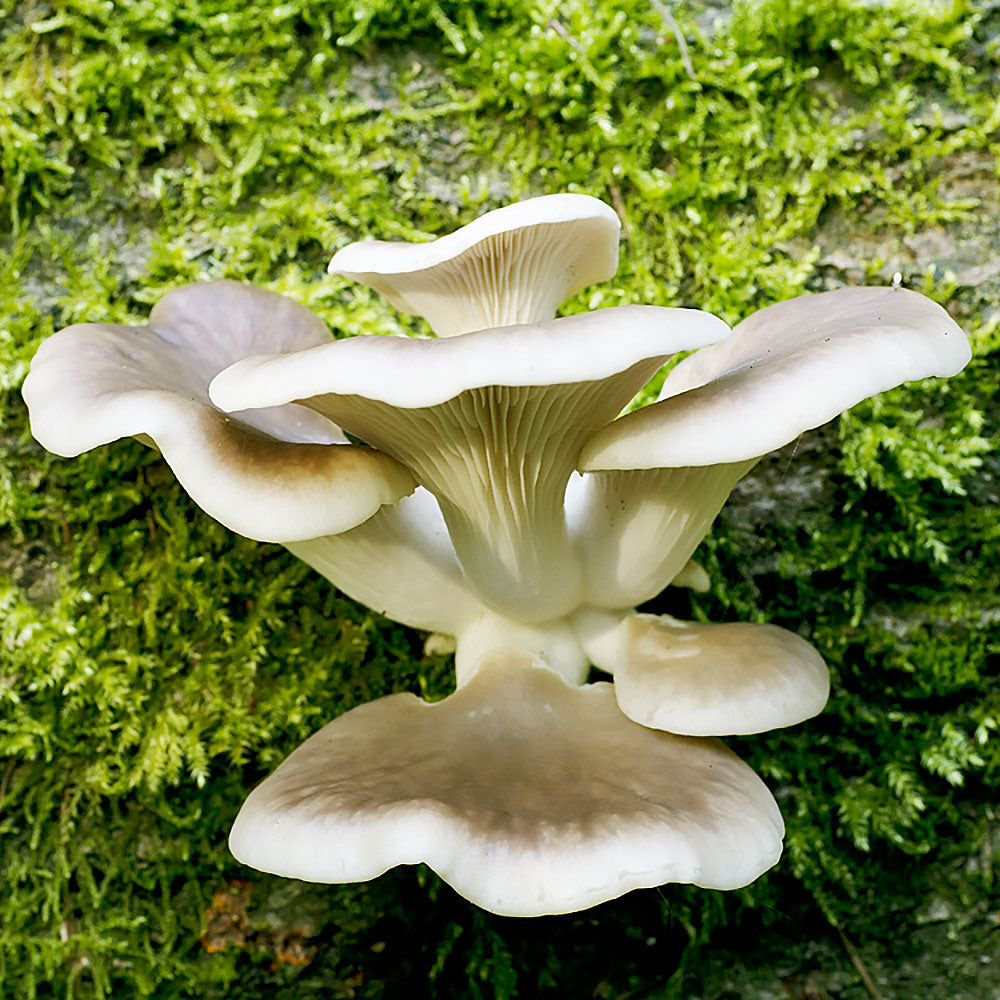
- Produces dense, compact clusters of cream to tan-capped fruiting bodies with consistently high yields
- Produces dense, compact clusters of cream to tan-capped fruiting bodies with consistently high yields
- Suitable for inoculating sterilized grain, agar petri dishes, straw, and hardwood sawdust substrates
- Fast colonization with reliable fruiting across a wide temperature range — well suited to both hobbyist and small commercial production
- Store refrigerated between 35–45°F; avoid freezing; use within 4–6 months of receipt
Lambert 123 Oyster Mushroom (Pleurotus ostreatus) Liquid Culture
Strain Overview
Lambert 123 is a commercial Pleurotus ostreatus strain designated by L.F. Lambert Spawn Co. of Coatesville, Pennsylvania — North America's oldest independent mushroom spawn manufacturer, founded in 1903. The "123" is Lambert's internal strain numbering, and this selection has remained in continuous use among commercial oyster mushroom growers for decades. It is recognized for fast mycelial growth, dense compact cluster formation, and consistent high yields. Its cream to tan-capped fruiting bodies are a practical advantage at commercial scale, simplifying harvesting, grading, and packaging. The strain's genetic stability has made it significant enough to serve as parent stock in newer hybrid oyster strains developed by other breeders.
Lambert 123 Oyster Mushroom — Cultivation Parameters
| Parameter | Range |
|---|---|
| Incubation Temperature | 70°F – 77°F |
| Incubation Time | 10 – 21 days |
| Fruiting Temperature | 50°F – 70°F |
| Fruiting Humidity | 85% – 95% |
| Pinning Time | 5 – 10 days |
| Total Fruiting Time | 7 – 14 days |
| Recommended Substrates | Straw, hardwood sawdust, masters mix, coffee grounds |
| Spore Print Color | White to lilac-grey |
Natural Habitat & Ecology
Pleurotus ostreatus is a saprophytic wood-decay fungus found in temperate and subtropical forests throughout North America, Europe, and Asia. In the wild it grows on dead and dying hardwood trees — particularly oak, beech, and elm — breaking down cellulose and lignin and returning nutrients to the surrounding ecosystem. The species is cold-tolerant and fruits naturally in autumn and early winter. In cultivation it adapts readily to a wide variety of lignocellulosic substrates, from pasteurized straw to supplemented hardwood sawdust, making it one of the most versatile and accessible mushroom species for growers at any scale.
Physical Characteristics
Lambert 123 produces dense, compact clusters of fruiting bodies from a shared base. Caps are broadly fan-shaped with a smooth surface and gently inrolled margins at pinning, ranging from 4–12 cm in diameter. Cap coloration is cream to warm tan — distinctly lighter than blue or grey oyster strains — with white gill tissue and firm white flesh throughout. The compact cluster structure and relatively uniform cap sizing are commercially practical traits, producing harvests that are easy to grade and package with minimal trimming. Fruiting bodies have a mild, clean aroma and firm texture characteristic of Pleurotus ostreatus.
Edibility & Culinary Use
Lambert 123 is an edible, choice culinary mushroom. Its flavor is mild and savory with a subtle sweetness, and its firm flesh holds up well to sautéing, roasting, and stir-frying. The cream to tan coloration makes it visually distinct from grey or blue oyster varieties on a plate or at market. As with all oyster mushrooms, harvest just before or at full cap extension for best flavor, texture, and shelf life — caps that have flattened fully and begun releasing spores decline rapidly in quality.
Liquid Culture — Usage Instructions
This syringe contains living Pleurotus ostreatus mycelium suspended in a sterile nutrient broth. Shake gently before use to distribute mycelium evenly throughout the solution. Inject directly into sterilized grain jars or bags through a self-healing injection port, or transfer to agar petri dishes for isolation and expansion. Liquid culture delivers established, actively growing mycelium directly to the substrate, accelerating colonization relative to spore-based inoculation methods. Use sterile technique throughout inoculation to prevent contamination.
Storage
Store refrigerated at 35–45°F in a dark location. Do not freeze. Use within 4–6 months of receipt for best viability. Bring the syringe to room temperature for 30 minutes before use.
Taxonomy — Lambert 123 Oyster Mushroom (Pleurotus ostreatus)
- Kingdom: Fungi
- Division: Basidiomycota
- Class: Agaricomycetes
- Order: Agaricales
- Family: Pleurotaceae
- Genus: Pleurotus
- Species: P. ostreatus
- Strain: Lambert 123 (L.F. Lambert Spawn Co., Coatesville, Pennsylvania, USA)
Disclaimer
This product is intended for cultivation and research purposes. Always properly identify any mushroom before consumption. Out-Grow is an independent supplier of this culture and is not affiliated with or endorsed by L.F. Lambert Spawn Co. This product is not intended to diagnose, treat, cure, or prevent any disease.
Commercial Oyster Mushroom - Lambert 123 (Pleurotus ostreatus) Liquid Culture Syringe
Product Overview
Key Features
Detailed Cultivation Guide
Storage Recommendations
Cultivation and Educational Value
Safety Information
Disclaimer
Description
- Commercial Oyster Mushroom (Pleurotus ostreatus) liquid culture in a 10cc syringe — the Lambert 123 strain, a proven production selection with decades of commercial use
- Produces dense, compact clusters of cream to tan-capped fruiting bodies with consistently high yields
- Produces dense, compact clusters of cream to tan-capped fruiting bodies with consistently high yields
- Suitable for inoculating sterilized grain, agar petri dishes, straw, and hardwood sawdust substrates
- Fast colonization with reliable fruiting across a wide temperature range — well suited to both hobbyist and small commercial production
- Store refrigerated between 35–45°F; avoid freezing; use within 4–6 months of receipt
Lambert 123 Oyster Mushroom (Pleurotus ostreatus) Liquid Culture
Strain Overview
Lambert 123 is a commercial Pleurotus ostreatus strain designated by L.F. Lambert Spawn Co. of Coatesville, Pennsylvania — North America's oldest independent mushroom spawn manufacturer, founded in 1903. The "123" is Lambert's internal strain numbering, and this selection has remained in continuous use among commercial oyster mushroom growers for decades. It is recognized for fast mycelial growth, dense compact cluster formation, and consistent high yields. Its cream to tan-capped fruiting bodies are a practical advantage at commercial scale, simplifying harvesting, grading, and packaging. The strain's genetic stability has made it significant enough to serve as parent stock in newer hybrid oyster strains developed by other breeders.
Lambert 123 Oyster Mushroom — Cultivation Parameters
| Parameter | Range |
|---|---|
| Incubation Temperature | 70°F – 77°F |
| Incubation Time | 10 – 21 days |
| Fruiting Temperature | 50°F – 70°F |
| Fruiting Humidity | 85% – 95% |
| Pinning Time | 5 – 10 days |
| Total Fruiting Time | 7 – 14 days |
| Recommended Substrates | Straw, hardwood sawdust, masters mix, coffee grounds |
| Spore Print Color | White to lilac-grey |
Natural Habitat & Ecology
Pleurotus ostreatus is a saprophytic wood-decay fungus found in temperate and subtropical forests throughout North America, Europe, and Asia. In the wild it grows on dead and dying hardwood trees — particularly oak, beech, and elm — breaking down cellulose and lignin and returning nutrients to the surrounding ecosystem. The species is cold-tolerant and fruits naturally in autumn and early winter. In cultivation it adapts readily to a wide variety of lignocellulosic substrates, from pasteurized straw to supplemented hardwood sawdust, making it one of the most versatile and accessible mushroom species for growers at any scale.
Physical Characteristics
Lambert 123 produces dense, compact clusters of fruiting bodies from a shared base. Caps are broadly fan-shaped with a smooth surface and gently inrolled margins at pinning, ranging from 4–12 cm in diameter. Cap coloration is cream to warm tan — distinctly lighter than blue or grey oyster strains — with white gill tissue and firm white flesh throughout. The compact cluster structure and relatively uniform cap sizing are commercially practical traits, producing harvests that are easy to grade and package with minimal trimming. Fruiting bodies have a mild, clean aroma and firm texture characteristic of Pleurotus ostreatus.
Edibility & Culinary Use
Lambert 123 is an edible, choice culinary mushroom. Its flavor is mild and savory with a subtle sweetness, and its firm flesh holds up well to sautéing, roasting, and stir-frying. The cream to tan coloration makes it visually distinct from grey or blue oyster varieties on a plate or at market. As with all oyster mushrooms, harvest just before or at full cap extension for best flavor, texture, and shelf life — caps that have flattened fully and begun releasing spores decline rapidly in quality.
Liquid Culture — Usage Instructions
This syringe contains living Pleurotus ostreatus mycelium suspended in a sterile nutrient broth. Shake gently before use to distribute mycelium evenly throughout the solution. Inject directly into sterilized grain jars or bags through a self-healing injection port, or transfer to agar petri dishes for isolation and expansion. Liquid culture delivers established, actively growing mycelium directly to the substrate, accelerating colonization relative to spore-based inoculation methods. Use sterile technique throughout inoculation to prevent contamination.
Storage
Store refrigerated at 35–45°F in a dark location. Do not freeze. Use within 4–6 months of receipt for best viability. Bring the syringe to room temperature for 30 minutes before use.
Taxonomy — Lambert 123 Oyster Mushroom (Pleurotus ostreatus)
- Kingdom: Fungi
- Division: Basidiomycota
- Class: Agaricomycetes
- Order: Agaricales
- Family: Pleurotaceae
- Genus: Pleurotus
- Species: P. ostreatus
- Strain: Lambert 123 (L.F. Lambert Spawn Co., Coatesville, Pennsylvania, USA)
Disclaimer
This product is intended for cultivation and research purposes. Always properly identify any mushroom before consumption. Out-Grow is an independent supplier of this culture and is not affiliated with or endorsed by L.F. Lambert Spawn Co. This product is not intended to diagnose, treat, cure, or prevent any disease.