


Description
White Rot Fungus (Earliella scabrosa) Liquid Culture
Bullet Points:
- Premium Liquid Culture: 12cc of high-quality, nutrient-rich liquid culture for cultivating Earliella scabrosa.
- Powerful Wood Decomposer: Specializes in breaking down lignin and cellulose, crucial for nutrient cycling.
- Sterile and Pure: Produced under sterile conditions to ensure a contamination-free culture.
- Resilient and Adaptive: Thrives on dead hardwood, particularly in temperate and tropical regions.
- User-Friendly: Ideal for mycologists, researchers, and fungal enthusiasts studying wood-decaying fungi.
Taxonomic Classification:
- Kingdom: Fungi
- Division: Basidiomycota
- Class: Agaricomycetes
- Order: Polyporales
- Family: Polyporaceae
- Genus: Earliella
- Species: Earliella scabrosa
What is the White Rot Fungus?
The White Rot Fungus (Earliella scabrosa) is a wood-decaying polypore known for its powerful ability to decompose lignin, leaving behind pale, fibrous remnants of wood. This unique decomposition process is what gives white rot fungi their name.
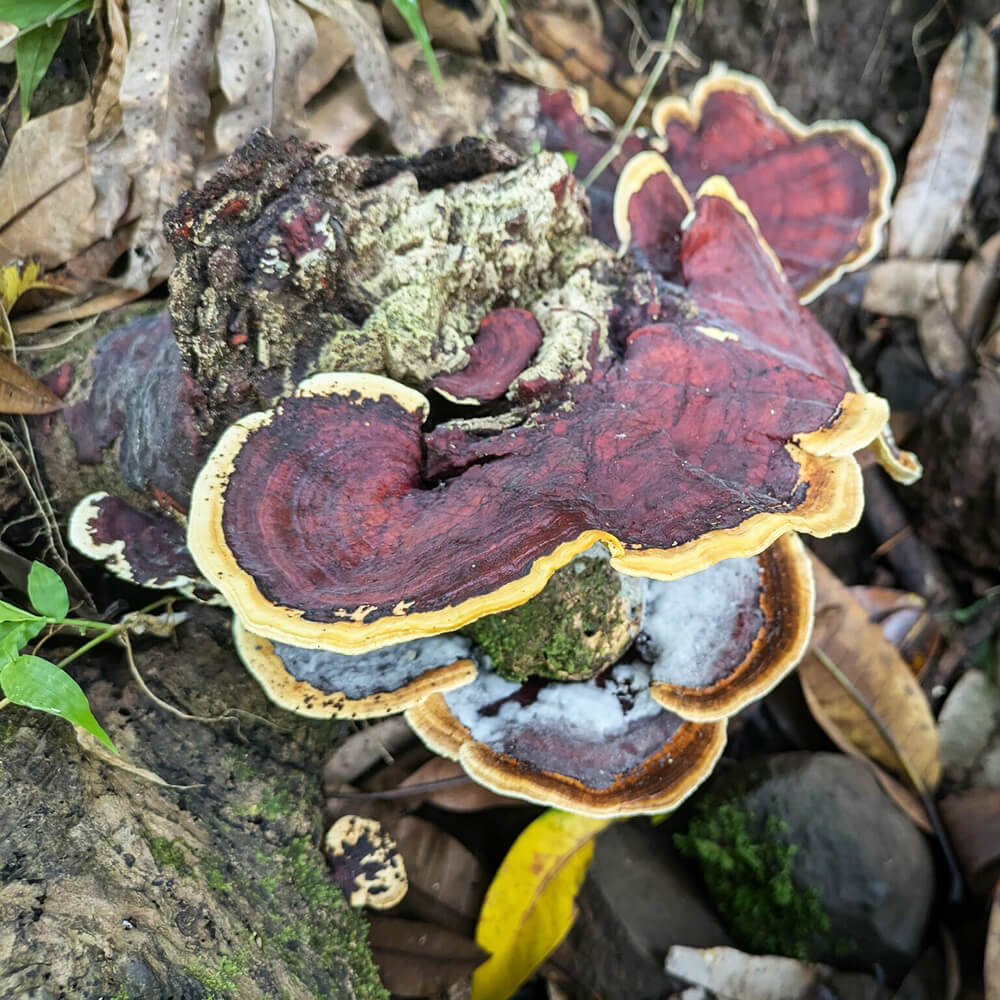
The fruiting body of Earliella scabrosa typically features a flat, fan-shaped cap with a velvety upper surface in shades of greyish-brown to tan. The underside contains densely packed white pores, where spores are produced.
Where Does Earliella scabrosa Grow?
Earliella scabrosa is widely distributed in temperate and tropical forests, where it thrives on dead hardwood trees such as oak, beech, and maple.
It prefers warm, humid conditions and is often found on fallen logs, stumps, and rotting tree trunks. The fungus is particularly efficient at colonizing damp wood, making it a key contributor to forest decomposition.
Ecological Role and Research Potential
A Potent Decomposer
As a white rot fungus, Earliella scabrosa is highly efficient at breaking down lignin, the complex organic polymer that gives wood its strength and rigidity. This process leaves behind pale, fibrous material, unlike brown rot fungi, which primarily break down cellulose.
Because of its ability to digest lignin, Earliella scabrosa is studied for its potential in bioremediation, particularly for degrading environmental pollutants and toxic compounds found in contaminated soil and industrial waste.
Potential Applications in Biotechnology
Researchers are exploring the powerful enzymes produced by Earliella scabrosa for use in biofuel production, pulp and paper processing, and biodegradation technologies. Its ability to efficiently break down complex plant material makes it a promising species in these industries.
Cultural and Scientific Significance
While Earliella scabrosa is not known for culinary or medicinal use, its role in forest ecology and biodegradation research makes it an essential species for environmental studies. Its ability to naturally decompose tough organic material offers insights into ecosystem balance and nutrient recycling.
Conservation and Sustainability
Earliella scabrosa is a common and resilient species, thriving in diverse environments. However, habitat destruction and climate changes can impact its presence in certain regions.
Cultivating this species using liquid culture allows researchers to explore its enzymatic activity, wood-decaying capabilities, and bioremediation potential in controlled environments.
Order Your White Rot Fungus Liquid Culture Today
Whether you’re a mycologist, environmental researcher, or fungal enthusiast, this 12cc liquid culture syringe of Earliella scabrosa provides a valuable tool for studying one of nature's most powerful wood-degrading fungi.
White Rot Fungus (Earliella scabrosa) Liquid Culture Syringe
Product Overview
Key Features
Usage Instructions
Storage Recommendations
Cultivation and Educational Value
Safety Information
Environmental and Sustainability Notes
Disclaimer
Description
White Rot Fungus (Earliella scabrosa) Liquid Culture
Bullet Points:
- Premium Liquid Culture: 12cc of high-quality, nutrient-rich liquid culture for cultivating Earliella scabrosa.
- Powerful Wood Decomposer: Specializes in breaking down lignin and cellulose, crucial for nutrient cycling.
- Sterile and Pure: Produced under sterile conditions to ensure a contamination-free culture.
- Resilient and Adaptive: Thrives on dead hardwood, particularly in temperate and tropical regions.
- User-Friendly: Ideal for mycologists, researchers, and fungal enthusiasts studying wood-decaying fungi.
Taxonomic Classification:
- Kingdom: Fungi
- Division: Basidiomycota
- Class: Agaricomycetes
- Order: Polyporales
- Family: Polyporaceae
- Genus: Earliella
- Species: Earliella scabrosa
What is the White Rot Fungus?
The White Rot Fungus (Earliella scabrosa) is a wood-decaying polypore known for its powerful ability to decompose lignin, leaving behind pale, fibrous remnants of wood. This unique decomposition process is what gives white rot fungi their name.
The fruiting body of Earliella scabrosa typically features a flat, fan-shaped cap with a velvety upper surface in shades of greyish-brown to tan. The underside contains densely packed white pores, where spores are produced.
Where Does Earliella scabrosa Grow?
Earliella scabrosa is widely distributed in temperate and tropical forests, where it thrives on dead hardwood trees such as oak, beech, and maple.
It prefers warm, humid conditions and is often found on fallen logs, stumps, and rotting tree trunks. The fungus is particularly efficient at colonizing damp wood, making it a key contributor to forest decomposition.
Ecological Role and Research Potential
A Potent Decomposer
As a white rot fungus, Earliella scabrosa is highly efficient at breaking down lignin, the complex organic polymer that gives wood its strength and rigidity. This process leaves behind pale, fibrous material, unlike brown rot fungi, which primarily break down cellulose.
Because of its ability to digest lignin, Earliella scabrosa is studied for its potential in bioremediation, particularly for degrading environmental pollutants and toxic compounds found in contaminated soil and industrial waste.
Potential Applications in Biotechnology
Researchers are exploring the powerful enzymes produced by Earliella scabrosa for use in biofuel production, pulp and paper processing, and biodegradation technologies. Its ability to efficiently break down complex plant material makes it a promising species in these industries.
Cultural and Scientific Significance
While Earliella scabrosa is not known for culinary or medicinal use, its role in forest ecology and biodegradation research makes it an essential species for environmental studies. Its ability to naturally decompose tough organic material offers insights into ecosystem balance and nutrient recycling.
Conservation and Sustainability
Earliella scabrosa is a common and resilient species, thriving in diverse environments. However, habitat destruction and climate changes can impact its presence in certain regions.
Cultivating this species using liquid culture allows researchers to explore its enzymatic activity, wood-decaying capabilities, and bioremediation potential in controlled environments.
Order Your White Rot Fungus Liquid Culture Today
Whether you’re a mycologist, environmental researcher, or fungal enthusiast, this 12cc liquid culture syringe of Earliella scabrosa provides a valuable tool for studying one of nature's most powerful wood-degrading fungi.