


Description
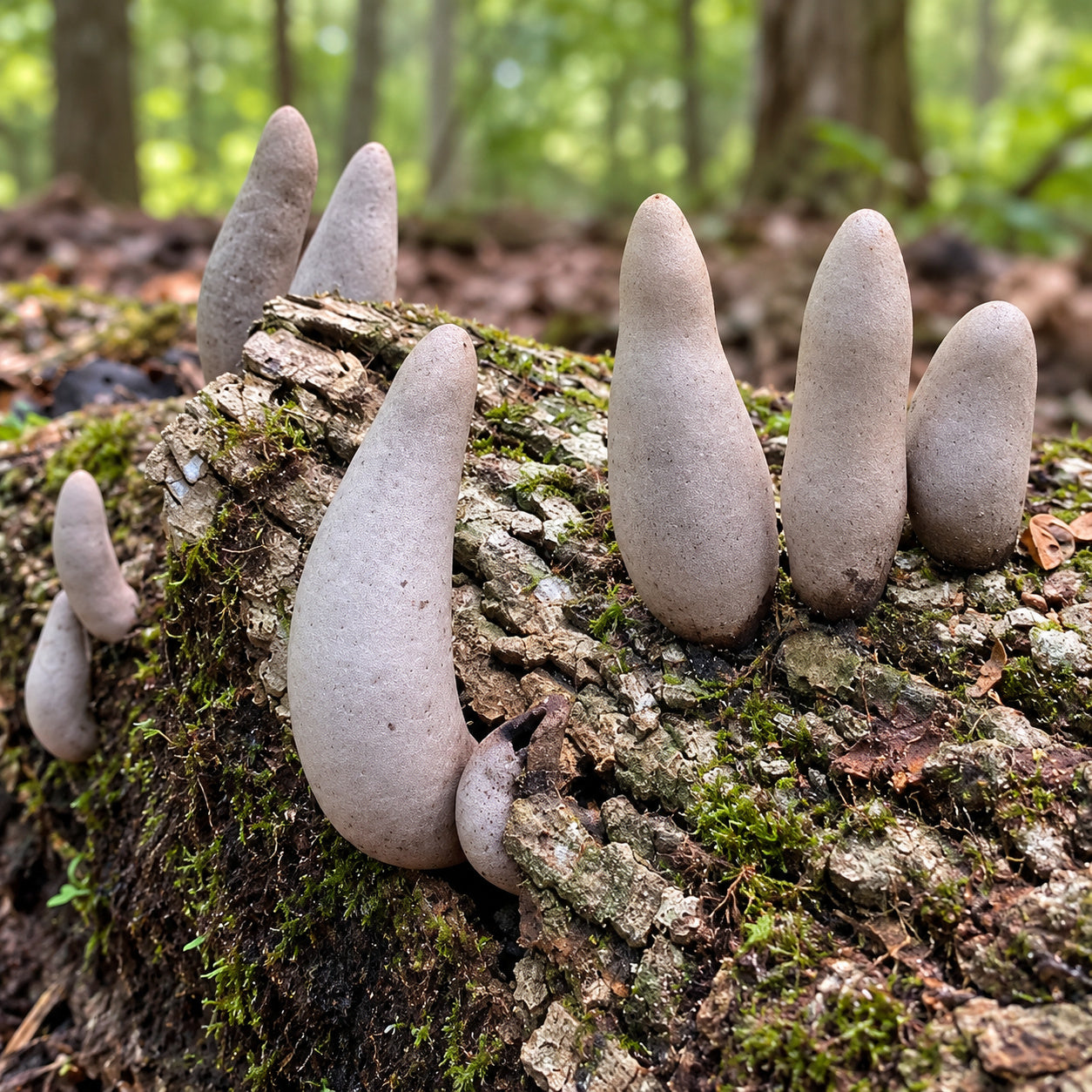
Dead Mans Toes (Xylaria poitei) is a robust tropical member of the flask fungi, thick, dark, and unmistakable, and this liquid culture delivers verified living stock. Out-Grow's liquid culture syringe contains live, actively growing Xylaria poitei mycelium in sterile nutrient solution.
Foundational culture work on this species dates to Rogers and Callan (1986), aimed at identification and life cycle rather than production, and no fruiting protocol has followed since. The genus, meanwhile, has become a hotbed for secondary metabolite and materials research, which is exactly where a maintained X. poitei culture earns its keep.
Why Work With Dead Mans Toes?
Xylaria is one of the most chemically productive genera in the fungal kingdom, generating novel antimicrobials and cytotoxic compounds across nearly every species screened. X. poitei stock offers metabolite hunters an under-screened tropical species, and offers collectors one of the most evocatively named fungi in existence.
Working Conditions:
Expand on MEA or PDA at 75 to 82 F. Xylaria cultures typically develop white margins that darken toward charcoal with age, often with visible dark stromatal tissue in mature plates. Liquid fermentation on malt-based broth follows standard practice for the genus.
Key Characteristics of Dead Mans Toes (Xylaria poitei):
- Ecology: Tropical saprotroph on dead hardwood, fruiting as thick, dark, finger-like stromata.
- Culture Behavior: Classic Xylaria plate habit: white advancing margin maturing to dark stromatal tissue.
- Research Value: An under-screened species in a genus renowned for novel secondary metabolites.
Taxonomy of Dead Mans Toes (Xylaria poitei):
- Kingdom: Fungi
- Phylum: Ascomycota
- Class: Sordariomycetes
- Order: Xylariales
- Family: Xylariaceae
- Genus: Xylaria
- Species: Xylaria poitei
Storage and Usage Tips:
Store your Dead Mans Toes liquid culture syringe in a cool, dark location and expand promptly. Darkened mature cultures remain viable, but transfers are strongest from the pale advancing margin.
Dead Mans Toes (Xylaria poitei) Liquid Culture Syringe
Description
Dead Mans Toes (Xylaria poitei) is a robust tropical member of the flask fungi, thick, dark, and unmistakable, and this liquid culture delivers verified living stock. Out-Grow's liquid culture syringe contains live, actively growing Xylaria poitei mycelium in sterile nutrient solution.
Foundational culture work on this species dates to Rogers and Callan (1986), aimed at identification and life cycle rather than production, and no fruiting protocol has followed since. The genus, meanwhile, has become a hotbed for secondary metabolite and materials research, which is exactly where a maintained X. poitei culture earns its keep.
Why Work With Dead Mans Toes?
Xylaria is one of the most chemically productive genera in the fungal kingdom, generating novel antimicrobials and cytotoxic compounds across nearly every species screened. X. poitei stock offers metabolite hunters an under-screened tropical species, and offers collectors one of the most evocatively named fungi in existence.
Working Conditions:
Expand on MEA or PDA at 75 to 82 F. Xylaria cultures typically develop white margins that darken toward charcoal with age, often with visible dark stromatal tissue in mature plates. Liquid fermentation on malt-based broth follows standard practice for the genus.
Key Characteristics of Dead Mans Toes (Xylaria poitei):
- Ecology: Tropical saprotroph on dead hardwood, fruiting as thick, dark, finger-like stromata.
- Culture Behavior: Classic Xylaria plate habit: white advancing margin maturing to dark stromatal tissue.
- Research Value: An under-screened species in a genus renowned for novel secondary metabolites.
Taxonomy of Dead Mans Toes (Xylaria poitei):
- Kingdom: Fungi
- Phylum: Ascomycota
- Class: Sordariomycetes
- Order: Xylariales
- Family: Xylariaceae
- Genus: Xylaria
- Species: Xylaria poitei
Storage and Usage Tips:
Store your Dead Mans Toes liquid culture syringe in a cool, dark location and expand promptly. Darkened mature cultures remain viable, but transfers are strongest from the pale advancing margin.