


Description
Black Truffle (Tuber melanosporum)
• 10cc Black Truffle (Tuber melanosporum) liquid culture syringe
• Ectomycorrhizal ascomycete species
• Forms symbiotic relationships with oak and hazel tree roots
• Native to calcareous soils of Southern Europe
• Intended for advanced cultivation and mycorrhizal research
• Store at room temperature in a clean, dark location
Black Truffle (Tuber melanosporum) Overview
Tuber melanosporum, commonly known as the Black Truffle or Périgord Truffle, is an ectomycorrhizal fungus belonging to the Ascomycota division. Unlike saprophytic mushrooms that decompose organic matter independently, this species forms a symbiotic association with compatible tree roots.
The fruiting bodies develop underground in alkaline soils and are traditionally produced through managed orchard systems rather than standard indoor substrate methods.
Characteristics and Identification
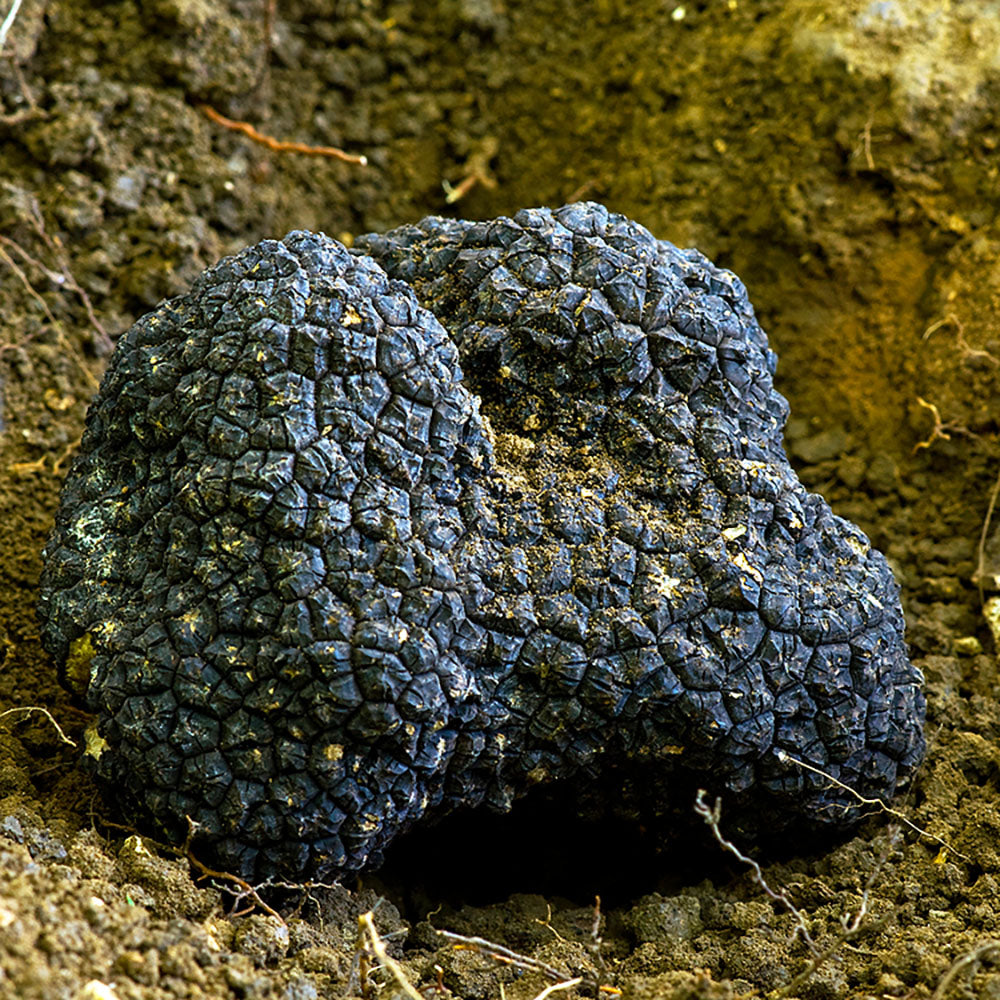
Black Truffle produces irregular, subterranean fruiting bodies with a dark outer rind and a marbled interior composed of spore-bearing tissue interwoven with sterile veins. As an ectomycorrhizal species, it colonizes the feeder roots of host trees, forming a fungal mantle and Hartig net structure.
Habitat and Ecology
Tuber melanosporum is native to Mediterranean regions with well-drained limestone soils and a pH range of approximately 7.5 to 8.3. It commonly associates with oak (Quercus species) and hazel (Corylus species), though other compatible hosts may be possible.
Fruiting is influenced by soil composition, microbial competition, host tree health, and long-term environmental stability. Commercial systems typically involve inoculated tree seedlings and multi-year orchard establishment.
Cultivation Considerations
Black Truffle is not a conventional indoor fruiting species. Successful production requires compatible host trees and appropriate soil conditions. This culture is recommended for experienced growers and researchers studying ectomycorrhizal fungi and tree-root symbiosis.
Scientific Interest
Tuber melanosporum has been widely studied for its role in fungal-plant symbiosis, soil ecology, and aromatic compound development. It serves as a model species for research involving long-term orchard systems and mycorrhizal establishment.
Black Truffle (Tuber melanosporum) Taxonomy
Kingdom: Fungi
Phylum: Ascomycota
Class: Pezizomycetes
Order: Pezizales
Family: Tuberaceae
Genus: Tuber
Species: Tuber melanosporum
If you want to learn more about Black Truffle (Tuber melanosporum) please click here read our article.
Black Truffle (Tuber melanosporum) Liquid Culture Syringe
Product Overview
Key Features
Detailed Cultivation Guide
Storage Recommendations
Cultivation and Educational Value
Safety Information
Disclaimer
Description
Black Truffle (Tuber melanosporum)
• 10cc Black Truffle (Tuber melanosporum) liquid culture syringe
• Ectomycorrhizal ascomycete species
• Forms symbiotic relationships with oak and hazel tree roots
• Native to calcareous soils of Southern Europe
• Intended for advanced cultivation and mycorrhizal research
• Store at room temperature in a clean, dark location
Black Truffle (Tuber melanosporum) Overview
Tuber melanosporum, commonly known as the Black Truffle or Périgord Truffle, is an ectomycorrhizal fungus belonging to the Ascomycota division. Unlike saprophytic mushrooms that decompose organic matter independently, this species forms a symbiotic association with compatible tree roots.
The fruiting bodies develop underground in alkaline soils and are traditionally produced through managed orchard systems rather than standard indoor substrate methods.
Characteristics and Identification
Black Truffle produces irregular, subterranean fruiting bodies with a dark outer rind and a marbled interior composed of spore-bearing tissue interwoven with sterile veins. As an ectomycorrhizal species, it colonizes the feeder roots of host trees, forming a fungal mantle and Hartig net structure.
Habitat and Ecology
Tuber melanosporum is native to Mediterranean regions with well-drained limestone soils and a pH range of approximately 7.5 to 8.3. It commonly associates with oak (Quercus species) and hazel (Corylus species), though other compatible hosts may be possible.
Fruiting is influenced by soil composition, microbial competition, host tree health, and long-term environmental stability. Commercial systems typically involve inoculated tree seedlings and multi-year orchard establishment.
Cultivation Considerations
Black Truffle is not a conventional indoor fruiting species. Successful production requires compatible host trees and appropriate soil conditions. This culture is recommended for experienced growers and researchers studying ectomycorrhizal fungi and tree-root symbiosis.
Scientific Interest
Tuber melanosporum has been widely studied for its role in fungal-plant symbiosis, soil ecology, and aromatic compound development. It serves as a model species for research involving long-term orchard systems and mycorrhizal establishment.
Black Truffle (Tuber melanosporum) Taxonomy
Kingdom: Fungi
Phylum: Ascomycota
Class: Pezizomycetes
Order: Pezizales
Family: Tuberaceae
Genus: Tuber
Species: Tuber melanosporum